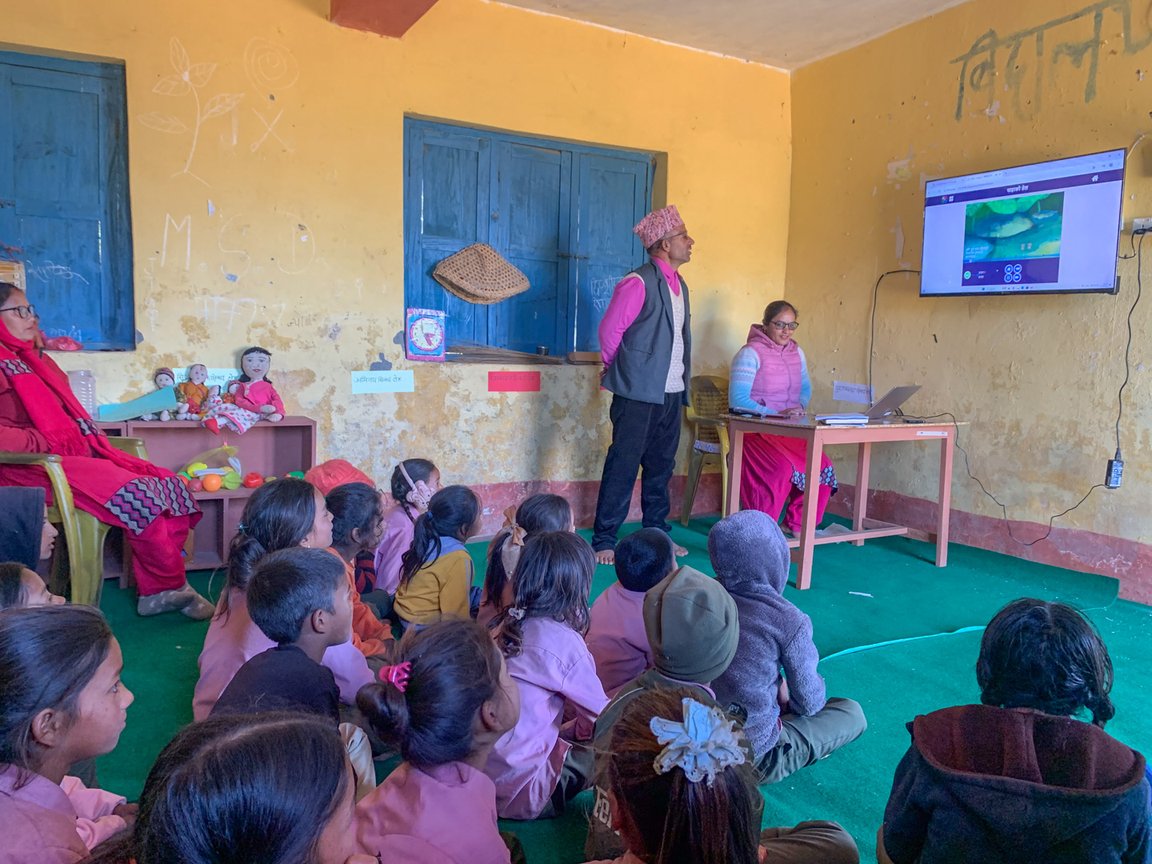
How a 10-day field mission connected three remote schools in Dailekh to the future of learning.
Deep in the mountains of Karnali Province, in a district where chalk and blackboards have long defined classroom life, something different happened in December 2025. A team from Open Learning Exchange (OLE) Nepal arrived in Dailekh with laptops, Raspberry Pi computers, Smart TVs and a plan to change how teachers teach and students learn.
The visit, spanning December 2 to 11, was part of the Expanding Educational Access through Technology (EAST) project. Over 10 days, the team set up fully functioning digital labs in three schools, trained over 35 teachers, and handed over equipment to local communities all in one of Nepal's most geographically remote provinces.
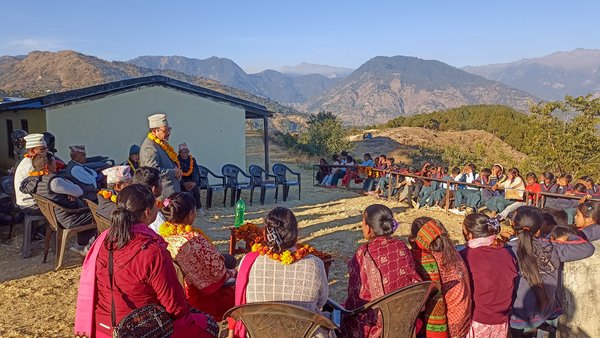
The three schools at the heart of this effort were Nava Durga Basic School in Chhatikot, Janajagriti Basic School in Pyusey, and Rainadevi Basic School in Kanda — all within Narayan Municipality. Each school serves children from early childhood through Grade 8, and each was starting from scratch with digital technology.
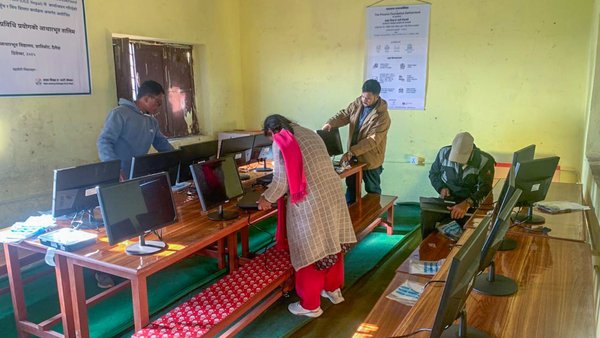
The installation was swift and thorough. Each school received 20 Raspberry Pi computers, a local server loaded with E-Pustakalaya a digital library and E-Paath interactive curriculum-aligned lessons, routers, monitors, headsets, and Smart TVs for the younger grades. Within days, rooms that once had only desks and notebooks were humming with screens.
Teachers First
Before students touched a single computer, the teachers had to learn. And that was the real work of this visit.
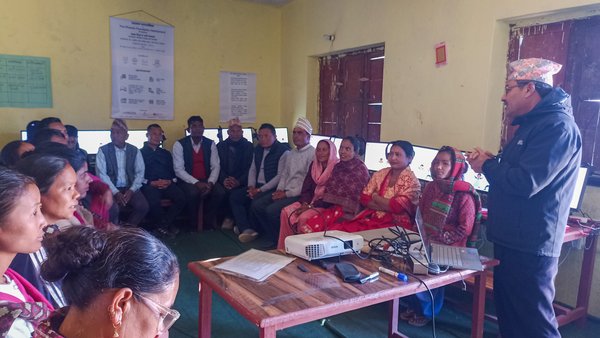
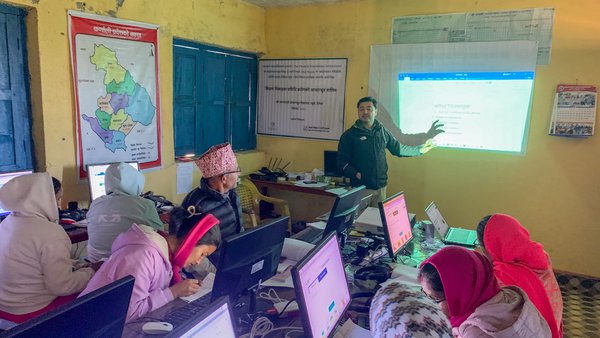
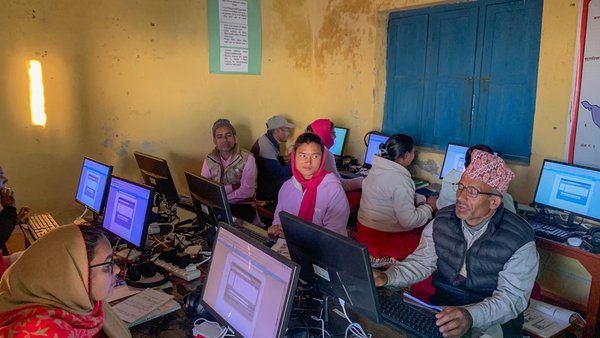
Over four intensive days at each school, more than 35 teachers were trained in everything from physically setting up a Raspberry Pi and configuring a local network to navigating E-Paath lessons and aligning them with their existing textbooks. Rather than passive observers, teachers were active participants — configuring routers themselves, troubleshooting connectivity, and practising delivery in front of their own students.
| "Initially, teachers struggled with using E-Paath and other digital resources. However, as the training progressed, they became more comfortable and acknowledged that with practice, they could integrate these tools into their teaching." |
|---|
At Nava Durga, 13 teachers discovered how resources like Bal Pathmala and Hamro Ramailo Kathaharu could make their lessons richer. At Janajagriti, the principal and staff set up their own network infrastructure from scratch. At Rainadevi, teachers worked in groups to map E-Paath modules directly to the national curriculum — building lesson plans that made complex ideas more accessible through multimedia.
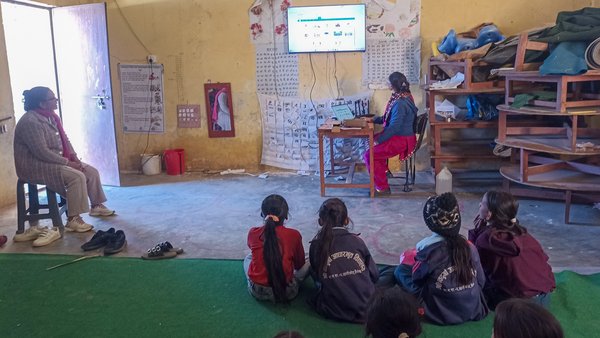
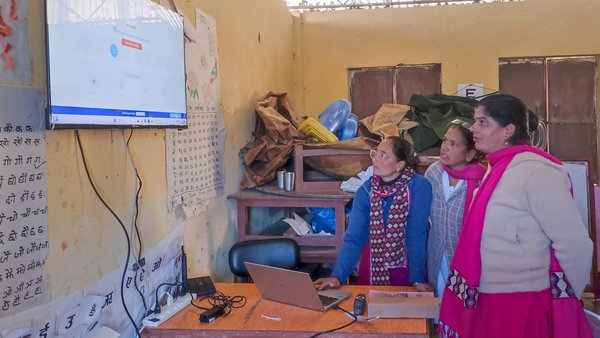
By the final day of training at each site, teachers were no longer learning about technology. They were using it — leading live lessons for their students on Smart TVs while trainers watched and offered feedback.
Students Light Up
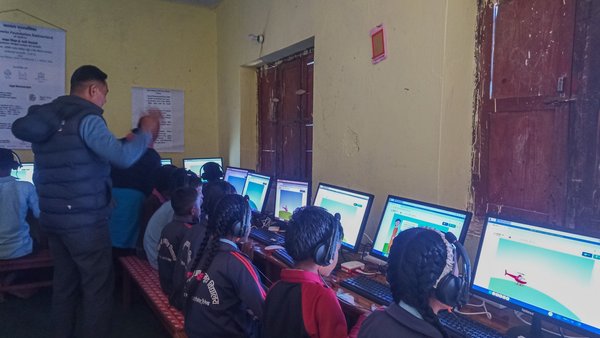
The response from students was immediate. Children from Grades 1 to 8 explored digital content with curiosity and enthusiasm that surprised even the trainers. For many, it was the first time they had interacted with a computer. The Smart TVs installed in ECD classrooms made stories and lessons come alive in ways a chalkboard simply cannot.
Teachers reported that student interest and motivation visibly increased during digital sessions — a sign that the technology was already doing what it was meant to do.
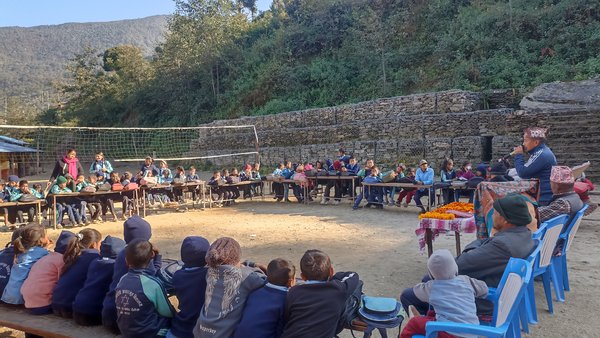
Each school's training concluded with something equally important: a formal handover ceremony. Equipment was officially transferred to school administrations in the presence of local Ward representatives and School Management Committee (SMC) chairpersons. Municipal Chairperson Loman Sharma attended the ceremony at Nava Durga, underscoring how much this project matters to the community.
These ceremonies were not just symbolic. Local leaders made concrete commitments — including the establishment of a dedicated Maintenance Fund at each school to cover repairs and hardware upkeep, independent of outside support.
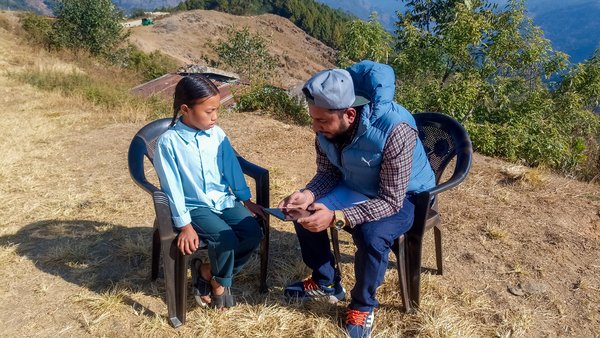
After completing the Dailekh training, the team swung through Surkhet to monitor three schools where the EAST project had launched back in September 2025. What they found was encouraging: digital classroom norms were displayed on walls, cloth covers were protecting the hardware from dust, and teachers were confidently using the technology on their own.
Refresher sessions were held to sort out a few remaining questions about connecting laptops to Smart TVs and troubleshooting E-Pustakalaya. But the bigger picture was clear — those schools had made a successful transition from installation day to everyday use.
The report is honest about the challenges. Several teachers, especially at the basic level, had minimal prior experience with computers and needed extra time and encouragement. Some schools lack dedicated lab rooms and reliable backup power. And perhaps the most structural challenge: ICT-based learning is not yet reflected in Nepal's formal student assessment system, meaning digital skills remain invisible on report cards.
Addressing these gaps is the focus of the project's next phase — follow-up training within six months, rotational device schedules for larger classes, and conversations with local education authorities about integrating digital learning into assessment frameworks.
The Dailekh deployment is the EAST project's second milestone in Karnali Province, following the earlier rollout in Surkhet. Taken together, they represent something meaningful: a growing network of schools in one of Nepal's most underserved regions where teachers are equipped, communities are invested, and children have access to learning tools that were unimaginable here just a year ago.
The hills of Karnali have always been far from the centre of things. This project is a small but real step toward changing that.