We are a team of undergraduate students (Jonah Bonner, Pan Rasking, Jacob Trotta, and Adam Buier) from Worcester Polytechnic Institute (WPI) in the United States. From September to December 2025, we partnered with OLE Nepal to develop and test new approaches for affordable and scalable STEM education in Nepal.
Since 2023, OLE Nepal has used educational robotics kits to offer a hands-on, visual way for students in 12 Lalitpur schools to get involved with STEM. OLE Nepal has developed robotics learning modules designed for students in grades 6–8, and their annual robotics competition/exhibition allows students to demonstrate their robotic creations.
The long-term scalability of OLE Nepal’s existing robotics program is hindered by the availability of robotics kits, since the Artec robotics kits used for the program are expensive to import to Nepal. Thus, the goal of our collaboration with OLE Nepal was to develop and test a new model for affordable STEM education by: (1) evaluating the effectiveness of OLE Nepal’s grade 6–8 robotics program in achieving its learning outcomes, (2) determining the key elements of a successful and scalable STEM education curriculum based on feedback from educators, and (3) designing and testing interactive, effective, and affordable STEM modules using locally sourced robotics kits.
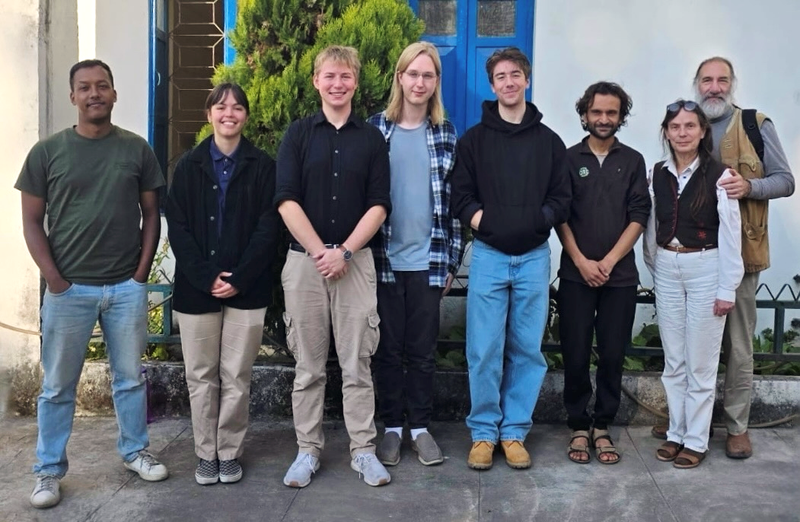
The WPI student team with Hrishav Raj Joshi (Robotics Coordinator), Pawan Dhakal (Senior Products Manager), and project advisors from WPI.
We gathered data on the existing OLE Nepal robotics program by accompanying the robotics instructors on their day-to-day school visits and observing the class sessions. These observations aimed to assess students’ comprehension of the concepts taught in each module and their development of crucial soft skills such as problem-solving, creativity, and teamwork. Overall, we found that the existing OLE Nepal robotics program is successful in its goal of teaching STEM concepts to students and gives students ample opportunity to engage in independent inquiry and problem-solving. However, we identified that the limited number of working Artec robotics kits in each classroom often required students to work in large groups. This made it difficult for all students to participate equally.
Based on this observation data and input from educators, our team developed and tested a new set of robotics kits and educational modules to be used as a model for future development. This model consists of three parts:
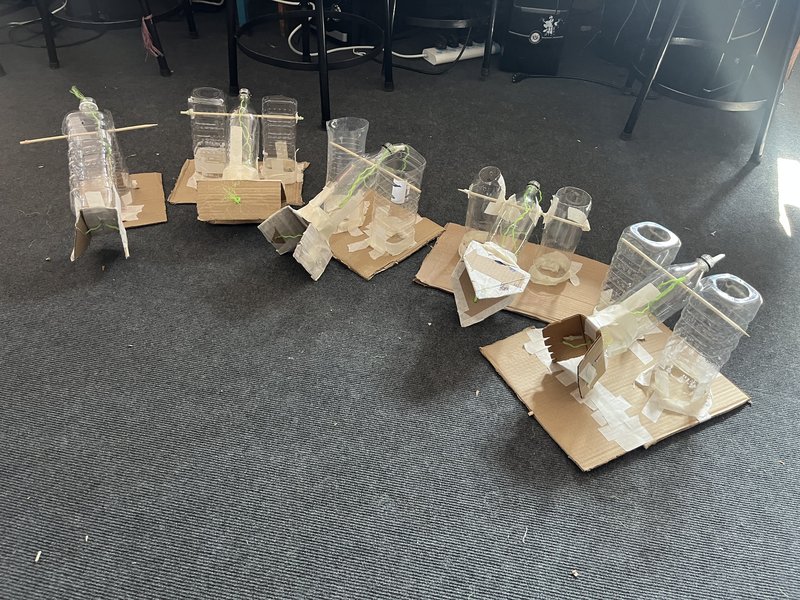
Mechanical arms built by students during WPI module testing at a local secondary school.
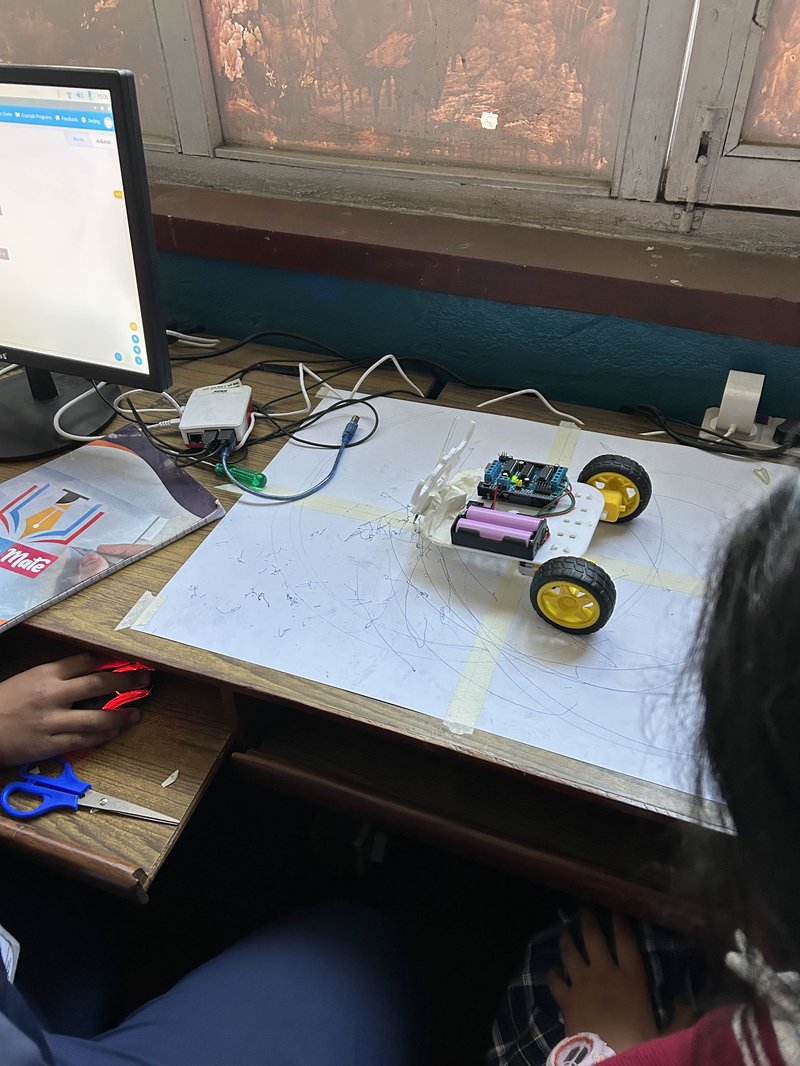
A robot developed by the WPI team drawing a geometric design.
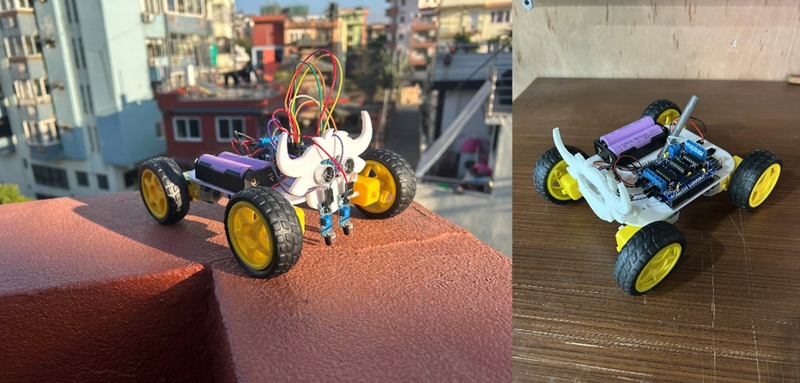
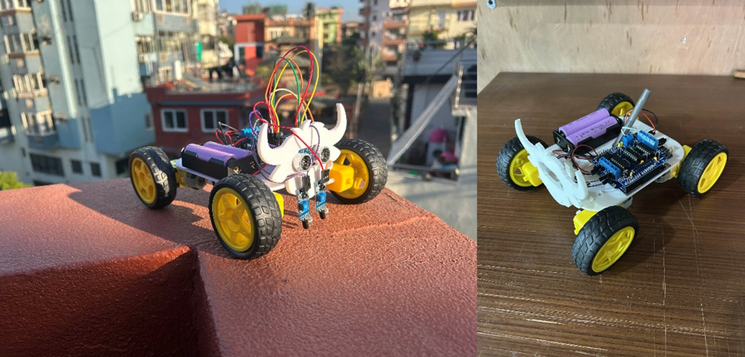
A fully assembled Youth Academic Kit (YAK) robot.
Our team gathered feedback on these robotics kits and modules by collaboratively teaching students in four Lalitpur schools. We found that there was a major benefit in teaching students using robotics kits built from affordable materials, since each classroom could support small groups of two to three students. This allowed all students to participate in the activities and fostered closer conversations among students. We also found that students were able to consistently take advantage of opportunities for creativity, which gave them a sense of ownership over their creations. The YAK robot served as an effective low-cost replacement for the existing robotics kits, with students able to build, wire, and program the robots to draw geometric shapes.
Our team has developed a detailed set of recommendations for OLE Nepal based on our data collection, which will support future efforts to expand opportunities for STEM education across Nepal. The presentation slides for the two model curriculum modules developed by us can be found here, along with design information for the YAK. More information on our work and results will be published on the WPI website soon.