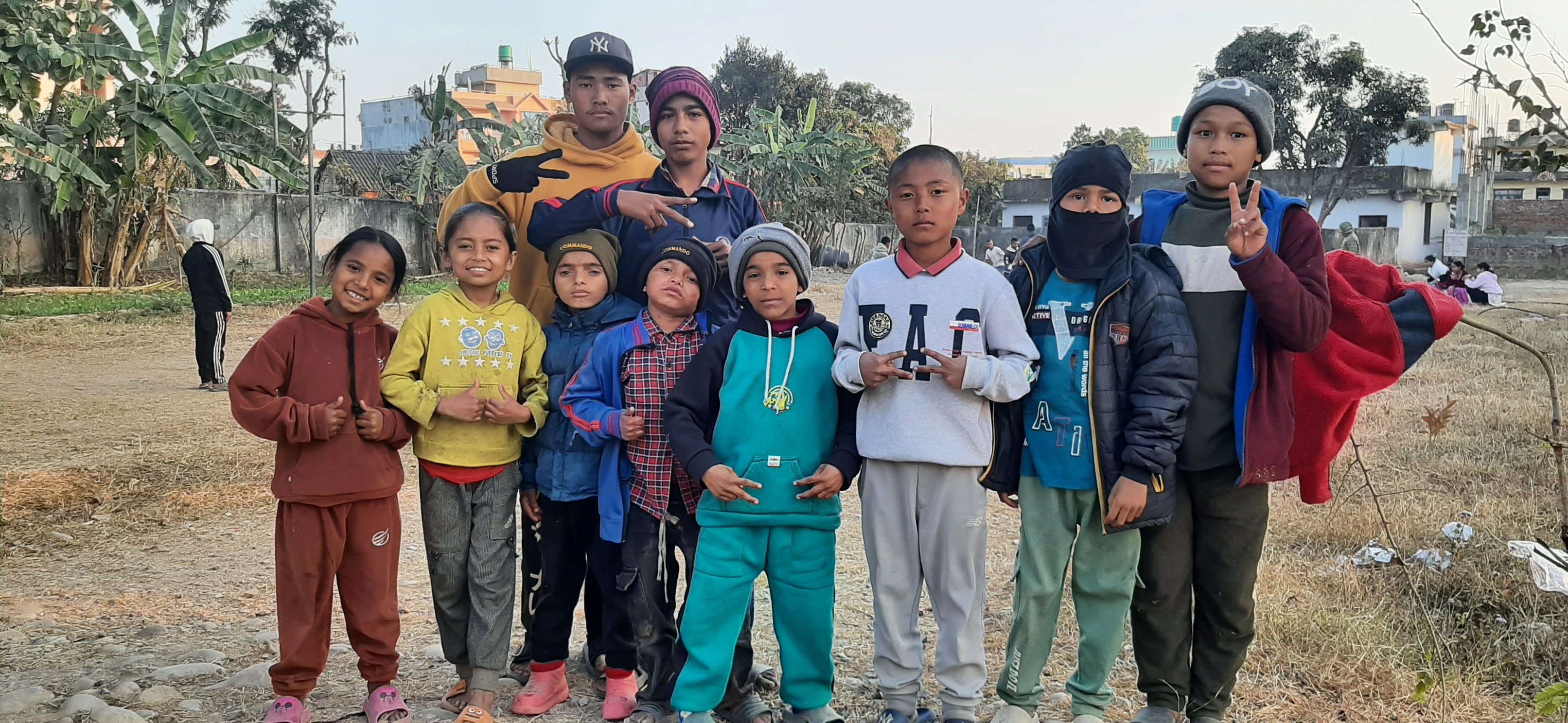
An eight-year-old hearing-impaired girl walks up to me, smiling, her hands gently speaking a language of silence. In the middle of our silent conversation, my eyes fall to her slippers and suddenly freeze.. The embossed smiley face on her left slipper is torn away, impossible to miss. That missing smile has been haunting me ever since.
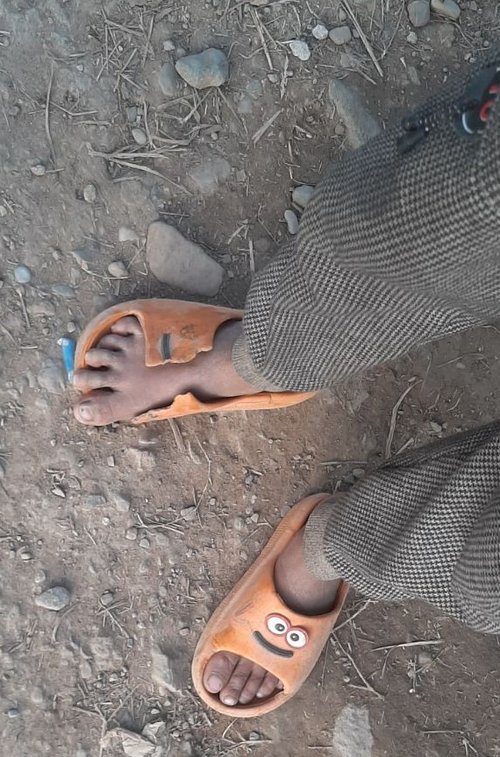
The smile is gone. The walk continues. She kept walking because she had no other shoes.
We spent four days there. The school also runs a residential hostel, which gives us a rare opportunity to spend time beyond the classroom to observe, interact, and truly connect with children who cannot hear or speak, yet express themselves vividly through their hands, eyes, and gestures.
The children were curious and full of life. They surrounded us asking questions in sign language, climbing trees, playing football, laughing, and competing for attention. I tried to communicate with them using my limited and unstructured sign language, mostly to build rapport. Everything felt joyful and light until I noticed one girl.
She was around eight years old. Innocent. Quietly observant. For a while, she watched me from a distance. Though I was a stranger, she eventually gathered the courage to come closer. While others were busy playing, she asked me a simple question through sign language: “Are you going home tomorrow?”
I wanted to answer honestly yes, I would be returning the next day. As I raised my hands to respond, my eyes drifted downward to her slippers.
And then, I froze.
One of her slippers was torn. The supportive front strap was missing, making it almost impossible to wear. Yet she was still walking in it, dragging it with her tiny feet. For a few seconds, my mind went blank. I could not imagine how painful or difficult it must have been for her to walk that way every single day.
I wondered how many times people must have stared at her feet. How many times she might have felt embarrassed. How many nights she might have cried quietly in the dark when other children teased her. How deeply she must have missed her parents while living away from home in a hostel coping not only with silence, but with poverty and separation.
What struck me the most was her silence, not just of sound, but of complaint. She never mentioned her slippers. She did not even ask for help. She kept walking, simply because she had no other pair of shoes.
That missing embossed smiley face on her slipper has stayed with me ever since. It became a symbol not only of what she lacks, but of the unseen struggles that deaf children in remote parts of Nepal endure every day just to access education.
Education, for these children, is not only about learning it is about resilience, dignity, and survival.
That girl was only one child among many I met at the school. As the days passed and conversations deepened, I realized that every child carried a story each with their own pain, loss, and quiet resilience.
While we had come to deploy accessible digital learning content, something else became increasingly clear to me. For these children, education though essential was not the first need. Before they could focus on learning, they needed warmth, safety, and dignity. Winter in Karnali is unforgiving. Cold seeps through thin walls, broken floors, and worn clothing. Small discomforts quickly become barriers to concentration, to curiosity, to hope.
I began to understand that a child cannot calmly engage with lessons on a screen if their feet are cold, if their hands are numb, if they are worried about slipping on a broken floor or falling ill. They need a safe place to sleep, proper bedding, warm clothes, secure footwear, and a clean, protective environment. They need sanitation, nourishment, and spaces where they can breathe easily and feel cared for.
Only when these basic needs are met do children become truly ready to learn.
Some may feel that integrating technology into education in such contexts sounds ambitious, even premature. But for deaf children, technology is not a luxury, it is often a bridge. Through visual learning, sign-language-friendly content, and self-paced exploration, technology can open doors that traditional systems have long kept closed. It can help them imagine futures they have never been shown.
This belief lies at the heart of our mission: accessible education is not only about content it is about creating conditions where learning is possible. What we tried to do next was not ambitious, only necessary. For children who live and learn within the same walls, whose world is already limited by silence, we wanted learning to continue beyond the classroom to reach their evenings, their curiosity, their unasked questions. Through sign-language–embedded digital stories and lessons, we tried to offer them something steady and visual, something they could return to at their own pace. Not to replace care or presence, but to quietly widen the world available to them, even when the lights go out and the slippers are neatly lined outside the dormitory.
What gives me hope is that this mission is not carried by organizations alone. From time to time, individuals step forward quietly, moved not by obligation but by compassion. In moments like these, plans evolve, priorities shift, and humanity takes the lead.
By the time we prepared to leave, the atmosphere in the hostel felt different. The children were warmer, more comfortable, and visibly at ease. There were no announcements, no acknowledgements, only softer smiles, steadier steps, and a sense of calm.
As I watched them, I felt something rare and lasting: satisfaction. Not the kind that comes from completing a project, but the kind that settles deep inside knowing that, for once, a child would face winter with warmth, dignity, and the quiet confidence to keep learning.
And sometimes, that is enough.