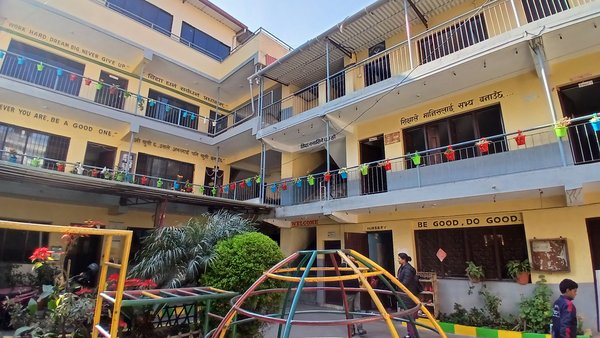
On February 18, 19, and 21, 2026, local community members gathered for a three-day story-building workshop at Minnath Sikshya Sadan Basic School in Tangal, Lalitpur. The workshop was part of O.L.E. Nepal’s ongoing effort under the LLEST Project to collect community stories for the Hamro Ramailo Kathaharu (HRK) collection, stories that are grounded in the real lives of local people, capturing their everyday experiences, and offering an authentic view of their communities. Through this process, we believe that the voices of the community are placed at the heart of stories that will later be developed into animated stories for children.
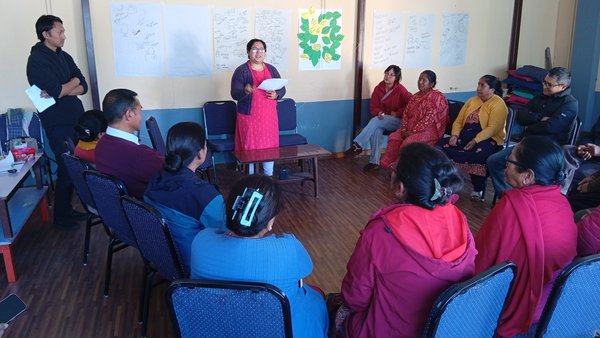
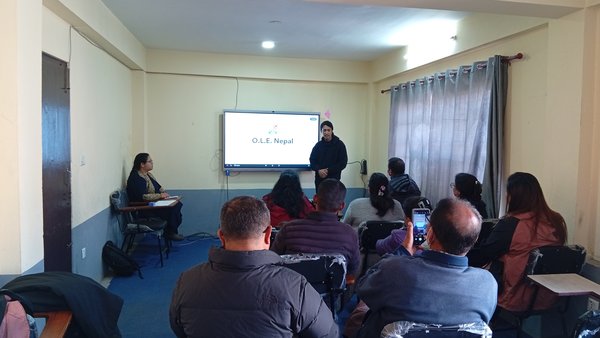
The workshop brought together sixteen participants, including homemakers, retired teachers and government staff, a music teacher, and the school principal, ranging in age from their forties to over seventy. The entire workshop was conducted in Nepalbhasa, allowing everyone to fully understand the activities and feel comfortable sharing their ideas, and perspectives.
The workshop began with introductions and orientation. In pairs, participants asked each other questions, discovered commonalities, and then introduced their partner to the group. This approach was a new experience for many as a way to make introductions in the group. The exercise helped break the ice and set a tone for the rest of the workshop day.
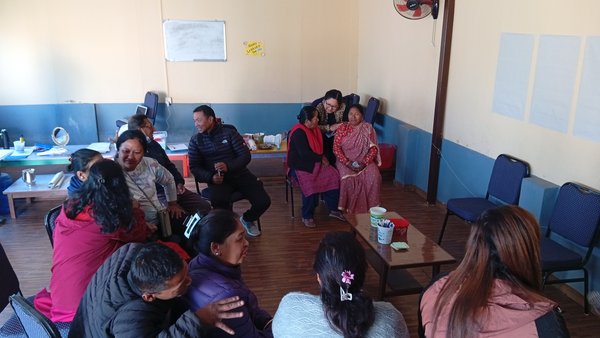
One of the first activities during the workshop, “Memory Drawing”, invited participants to illustrate personal memories using simple doodles. Guided by reflective prompts, participants reflected silently before drawing objects representing moments of curiosity, courage, or everyday life. Many shared recollections from their own lives. For instance, one participant recalled performing in the Kartik Naach (a traditional musical performance at Patan Durbar Square, witnessed by large crowds), a moment that required both courage and focus. Others highlighted learning new skills despite challenges: one participant shared her journey of learning to ride a bicycle later in life, while another recounted learning to play the harmonium despite initial ridicule for pursuing an activity not considered appropriate for women. Childhood experiences also surfaced as important reflections: one participant in her seventies fondly remembered stitching clothes as a personal achievement, while another recounted persuading her strict father to allow her to wear slippers while fetching water.
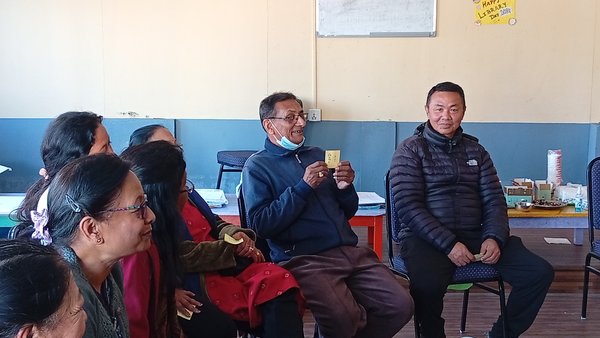
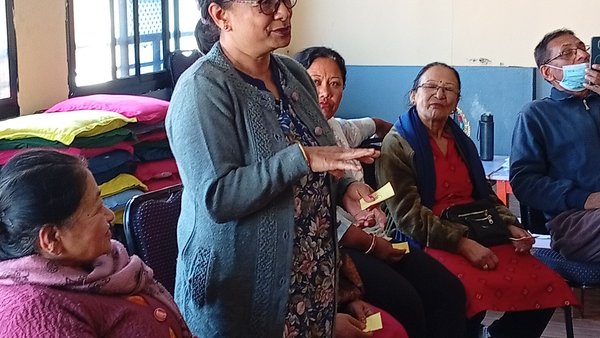
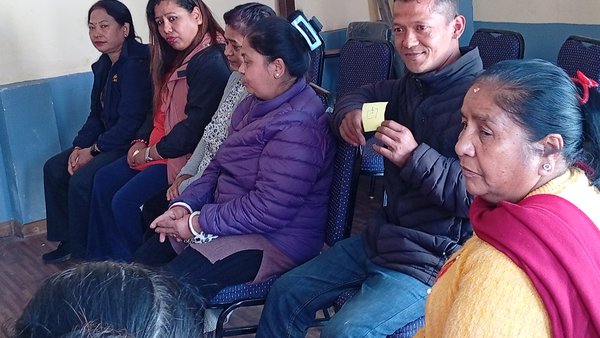
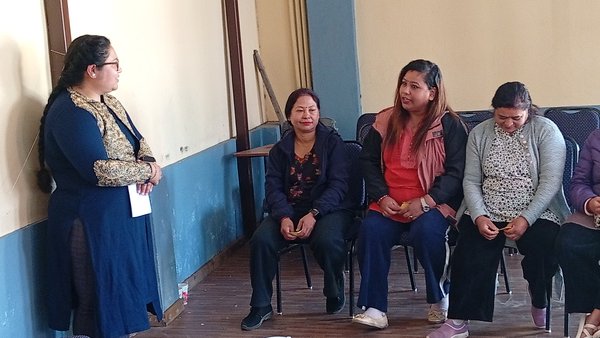
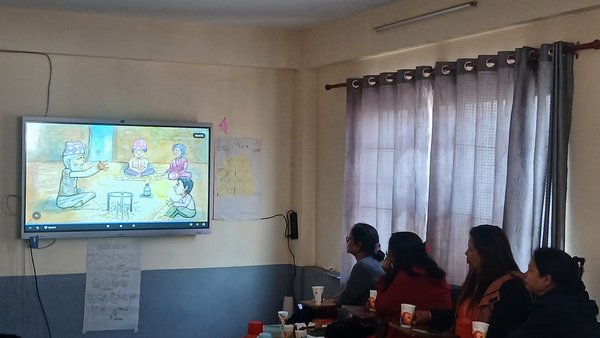
The second day focused on understanding what makes a story engaging. Participants began by watching a selected story from the HRK collection, Ma Bajey Ra Bhoot, and discussing it. While initial responses tended to focus on the moral of the story, facilitators guided participants to notice key story elements and techniques, emphasizing structure, sound effects, visuals, and delivery. Participants then shared their favorite movies, novels, and memories of storytellers from their lives, exploring techniques such as humor, gestures, vivid descriptions, and age-appropriate narratives.
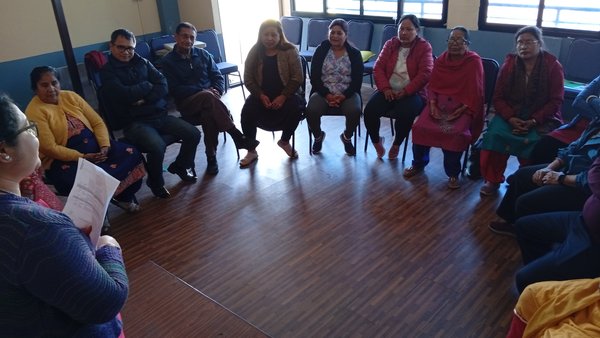
Next, an activity “chain-story game” encouraged participants to create stories line by line, building confidence in collaborative storytelling. Later, participants formed three groups to develop their own stories, with facilitators guiding them to weave local experiences, cultural details, and personal memories into coherent narratives.
On the final day, the three groups continued developing the stories they had initiated on Day 2 and performed the story.
Set near Minnath Temple in Lalitpur, the first story follows a young girl captivated by a local Bhajan Mandal (a community group that gathers daily to sing devotional songs and play traditional instruments). Initially hesitant due to societal expectations around gender roles, she gradually joins music classes with the guidance of her mentor, an elderly music teacher. Through hard work and support, she overcomes these norms, learns to play the harmonium, and performs alongside other students, earning recognition and pride from her community. The story highlights curiosity, determination, and challenging traditional expectations.
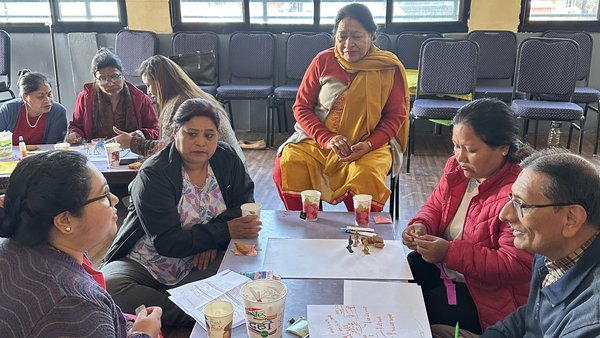
The story in this group follows a young girl from a farming family who dreams of learning to ride a bicycle despite discouragement from friends and parents who insist that cycling is only for boys. Through determination and practice, she not only learns cycling but also inspires others in her community, including adult women, to form a cycling group. The story celebrates self-confidence, and the ripple effect of individual courage on community life.
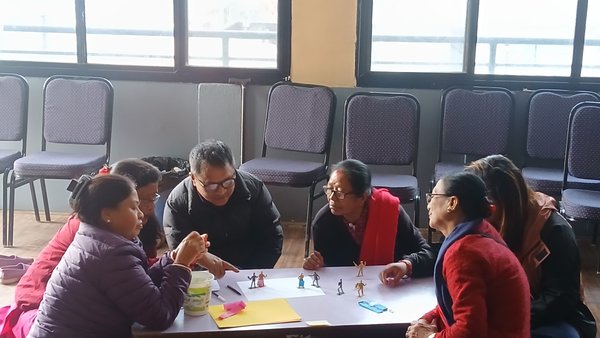
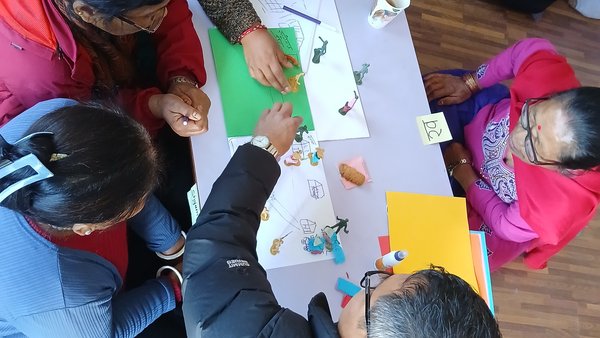
Set near Patan Durbar Square, this story follows a girl who struggles to fetch water barefoot due to her father’s strict rules. With the support of her family and teacher, she convinces her father to allow her to wear slippers, easing her daily hardships. The story emphasizes a small but meaningful social change within the family and community context.
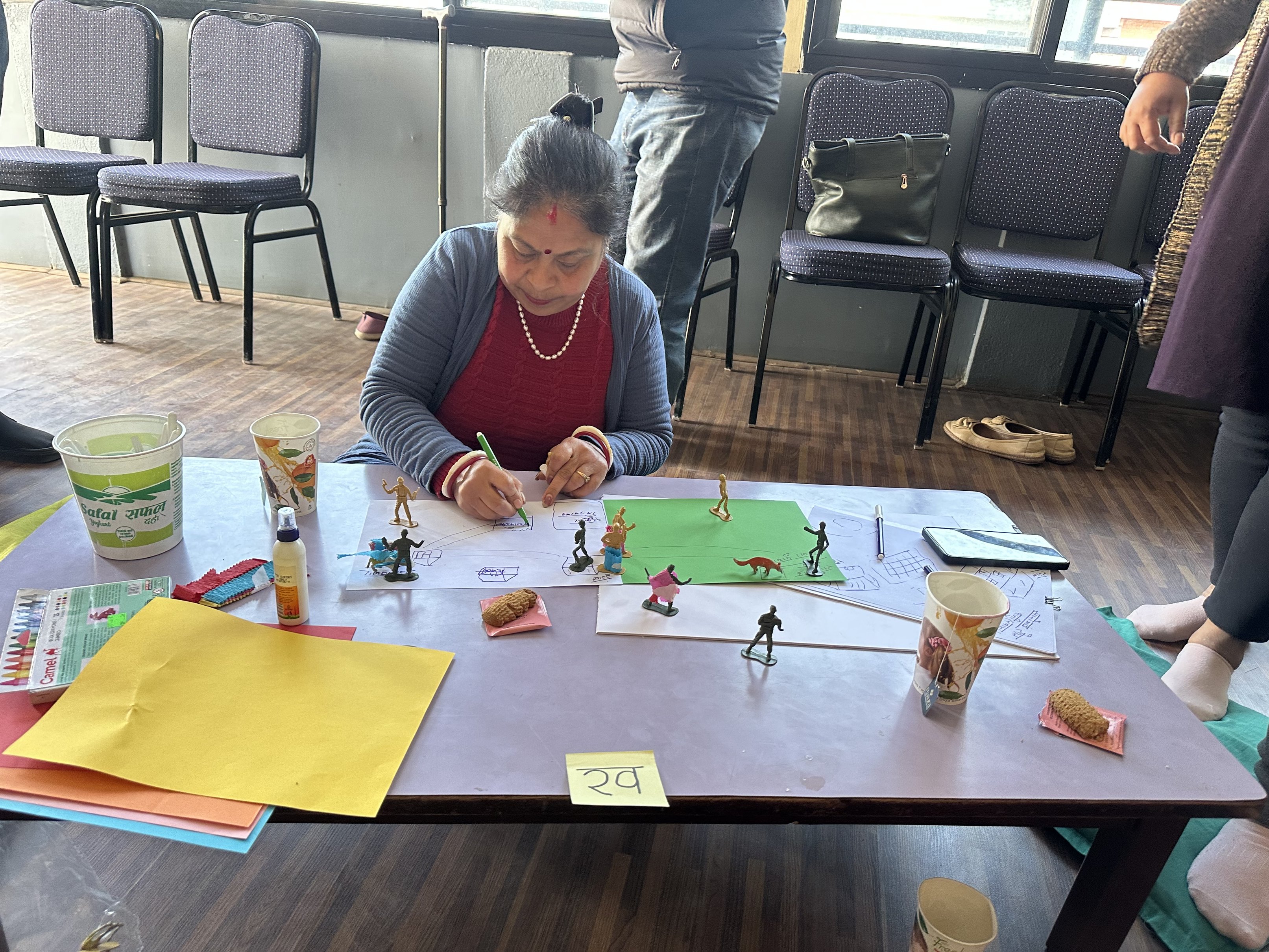
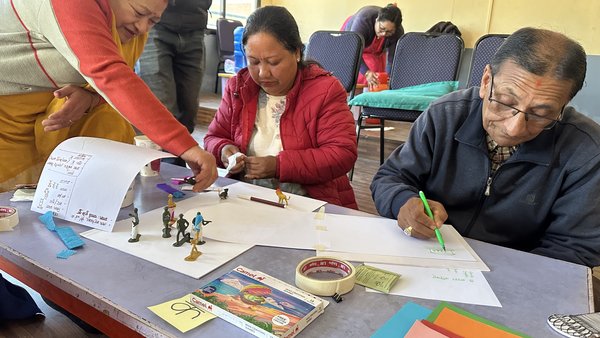
Throughout the day, facilitators encouraged participants to draw on personal experiences, cultural elements, and societal observations. The use of collaborative discussions, and props allowed everyone to actively contribute. Groups designed miniature stages on paper, used human figures to enact dialogues, sketched landscapes bringing their stories visually and narratively to life. The stories performed by each of the three teams were documented on video, which we aim to use as references to develop them into animated stories for children.
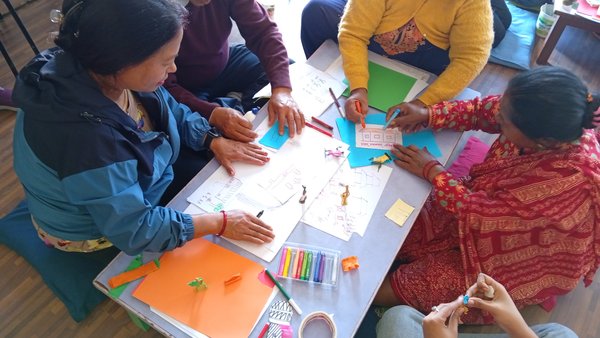
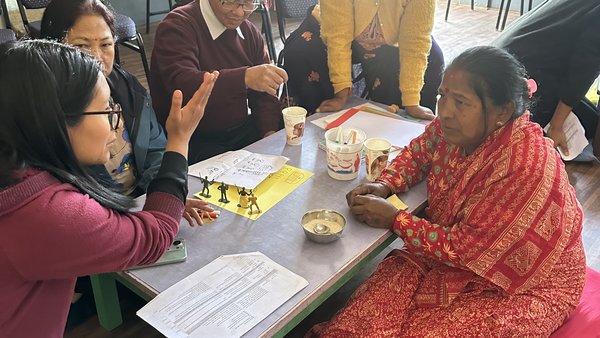
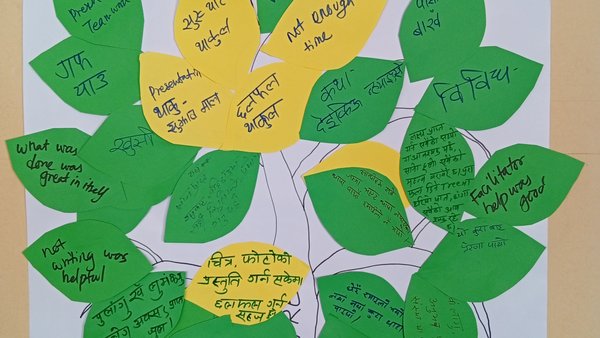
By the end of the third day of the workshop, participants were pleasantly surprised by their own storytelling abilities and by how effectively they could create meaningful stories together as a group. We also reflected that conducting the workshop entirely in Nepalbhasa proved especially impactful, giving participants the space to articulate thoughts, share experiences, and express themselves comfortably and authentically in their native language. The workshop had a predominantly female participation (over 70%). Story outputs reflected the themes relevant to women’s experiences, aspirations, and challenges in the local context.
The stories created during the workshop will be developed into animated content and other learning resources as part of the HRK collection. We believe this will ensure that the voices, and experiences of the Tangal community continue to reach and inspire children everywhere.
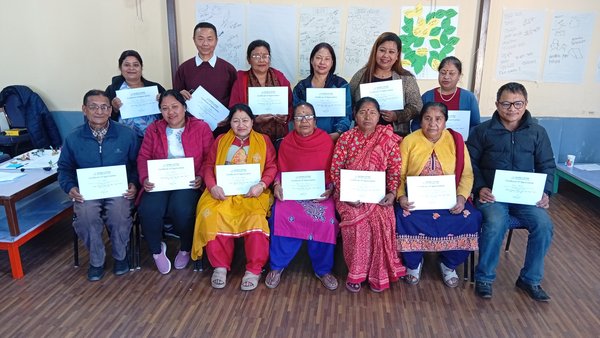
We would like to sincerely thank all the participants who shared their time and experiences during the workshop. We are also grateful to all the members of Minnath Sikshya Sadan Basic School for providing a welcoming space and supporting the arrangements that helped the workshop run smoothly. Finally, we thank our partner ONGD-FNEL for their continued support in making initiatives like this possible and for enabling us to work closely with communities to create meaningful educational materials.