| The story of how three schools in Karnali Province became the starting point for a province-wide digital education movement |
|---|
In September 2025, a team from Open Learning Exchange Nepal (OLE Nepal) arrived in Surkhet with a mission: to turn three ordinary government schools into functioning digital learning labs and to do it in thirteen days.
This was the opening chapter of the Expanding Educational Access through Technology (EAST)project in Karnali Province. What the team built in those two weeks would become the model that later reached Dailekh and, eventually, schools across the region.
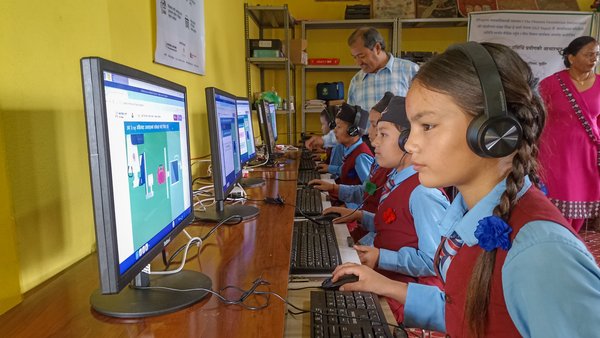
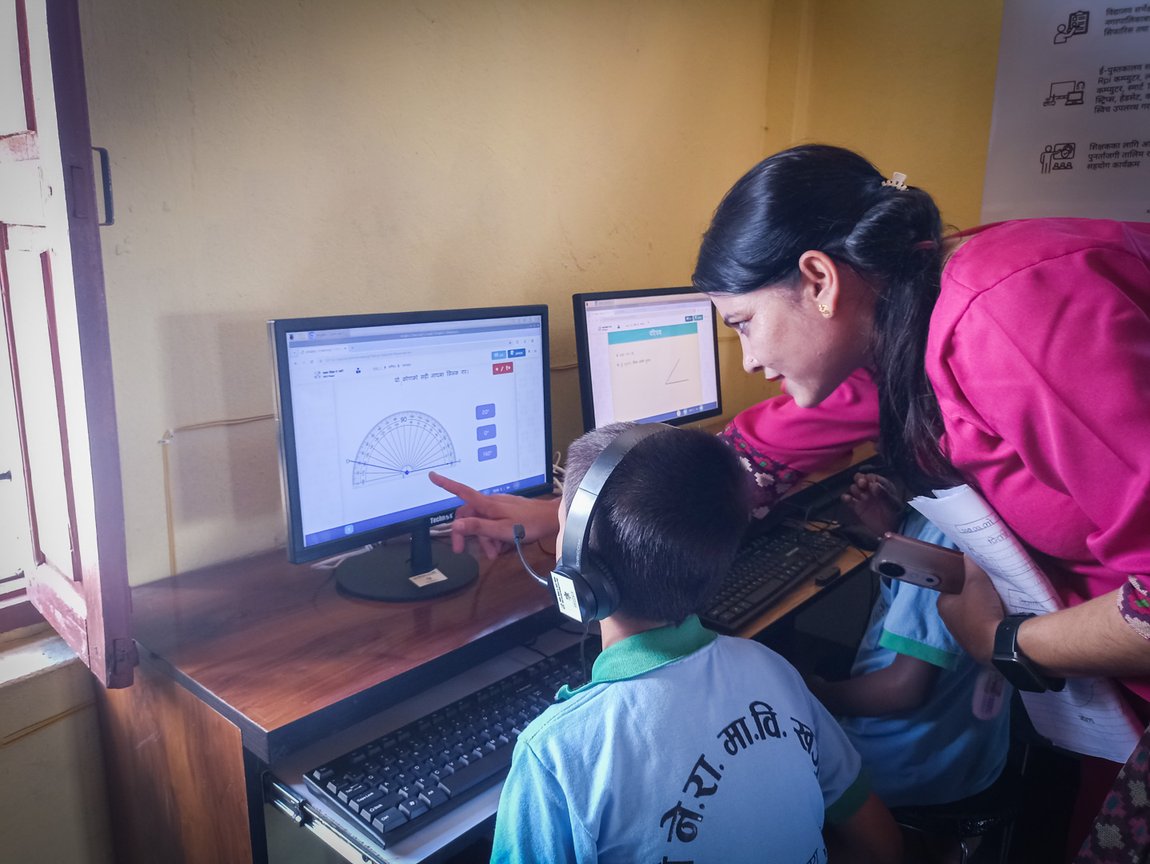
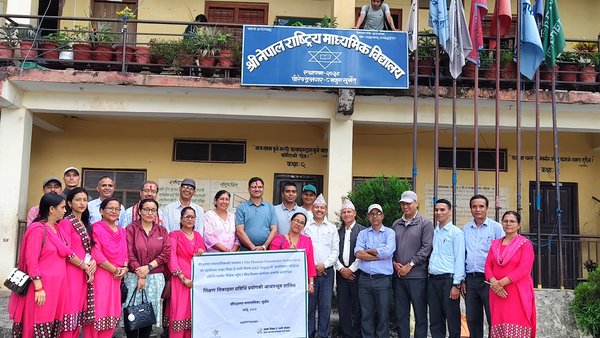
The deployment focused on three schools within Birendranagar Municipality: Shree Janajagrit Primary School in Padampur, Shree Nepal Rastriya Secondary School in Khajura, and Shree Chhabi Basic School in Kalagaun. Together, they represent a cross-section of Surkhet's public education landscape, from a small primary school to a large secondary institution serving hundreds of students.
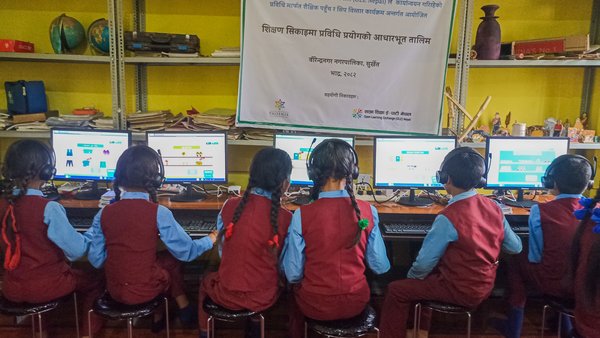
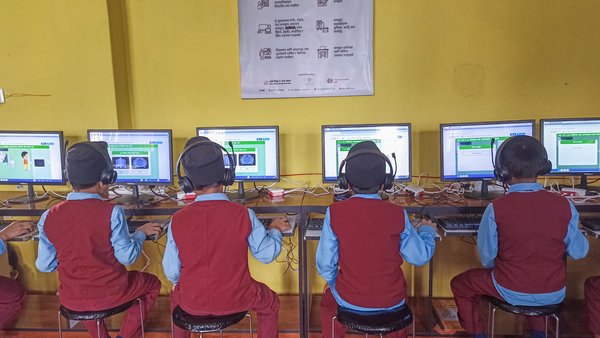
Each school received the same foundation: 20 Raspberry Pi computers, a local server loaded with E-Pustakalaya (a digital library) and E-Paath (interactive curriculum-aligned lessons), routers, monitors, headsets, and Smart TVs for younger grades. The equipment was identical. What differed was each school's starting point and the journey each community took over the four days of training that followed.
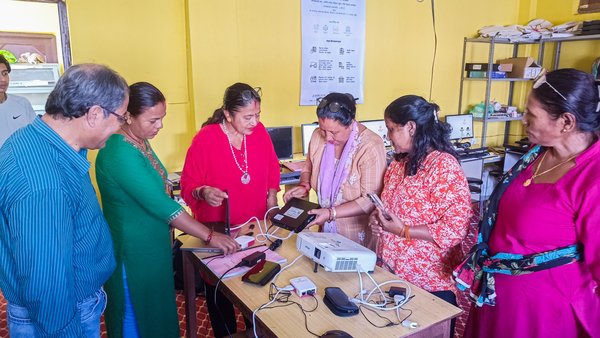
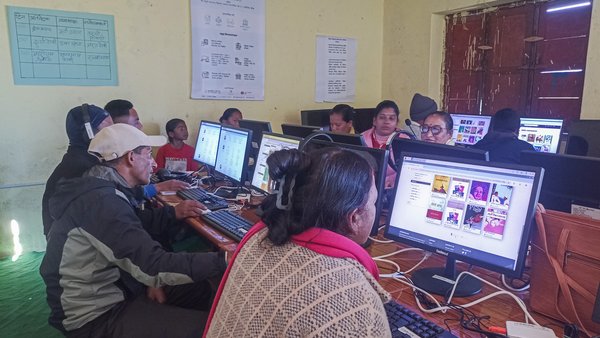
More than 50 educators attended training across the three schools.
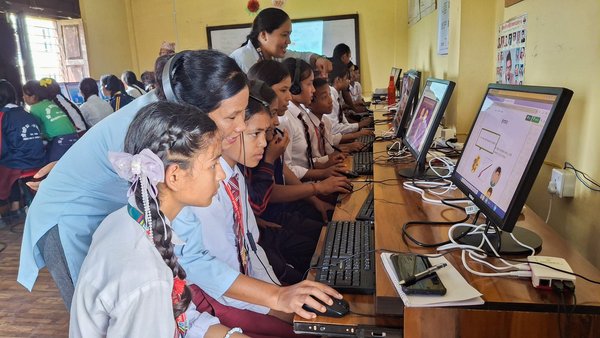
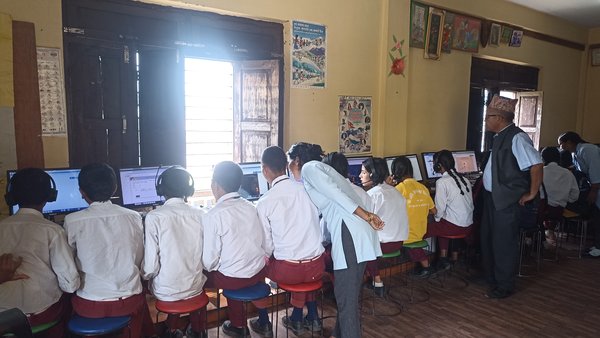
The four-day programme moved methodically from foundation to application. On day one, teachers took student and teacher surveys to understand current learning levels, then rolled up their sleeves to physically configure the Raspberry Pi units, routers, and local networks. By day two, they were navigating the E-Pustakalaya digital library, exploring its library of books, audio files, and educational videos. Day three brought curriculum alignment, where teachers worked in groups to map E-Paath interactive modules to their specific subjects and grade levels, building lesson plans as they went. By day four, students were in the room, and teachers were leading actual lessons.
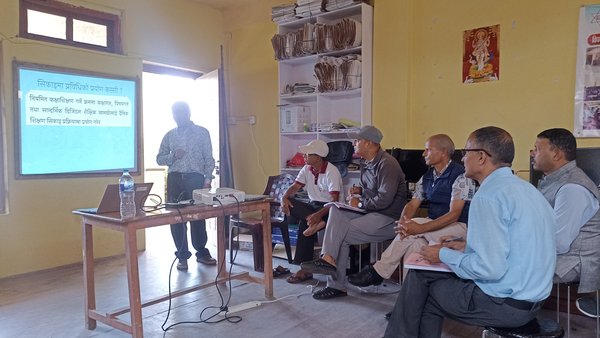
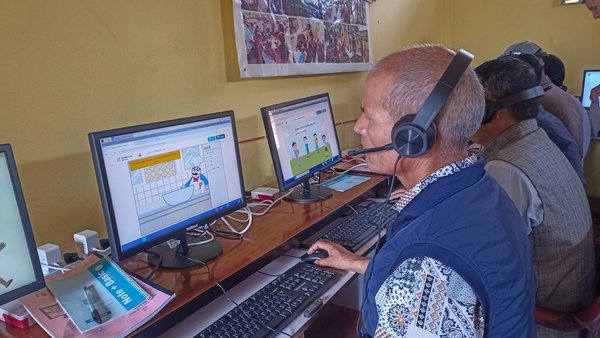
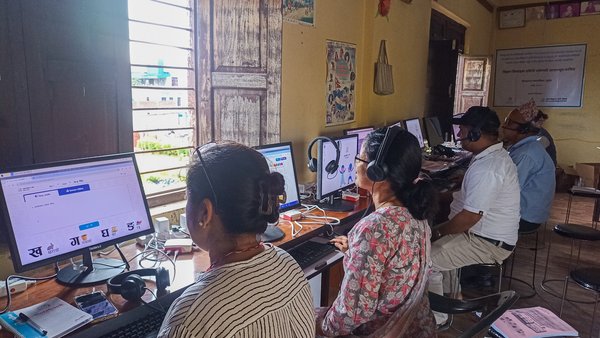
At Shree Janajagrit Primary School, eight teachers (six women and two men) participated in the training. The school runs from Early Childhood Development through Grade 5, and for most of its staff, this was their first serious encounter with computers in a classroom context. Resources like Bal Pathmala and Hamro Ramailo Kathaharu gave them a practical starting point: familiar content delivered in a new way.
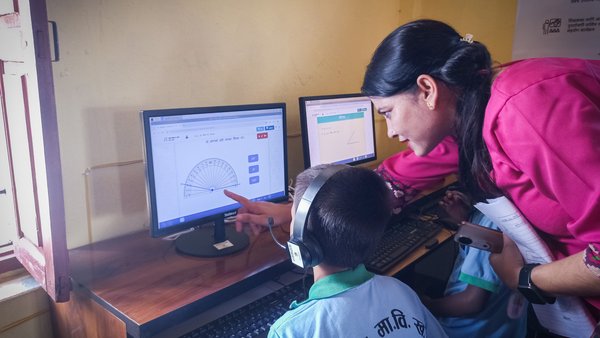
Shree Nepal Rastriya Secondary School brought the largest group, 23 teachers representing a wide range of subjects. The energy in that training room was notable. Teachers were enthusiastic about the Smart TV in particular, recognising it as something they could use immediately with large classes. One teacher singled out the interactive maths games, noting that they clarify concepts in ways that static textbook exercises do not. This school is also one of the most complex to serve: some classes have over 80 students, making individual computer access a real logistical challenge.
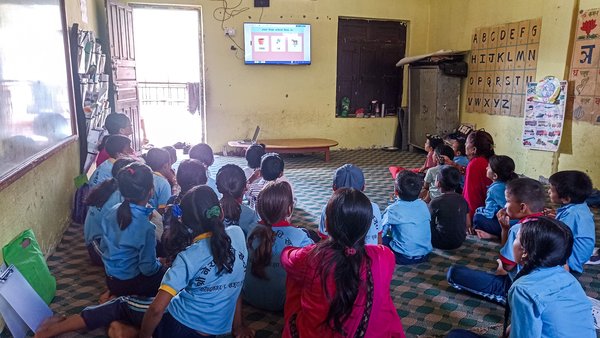
At Shree Chhabi Basic School, the journey was perhaps the most honest reflection of what change feels like. Initially, teachers struggled. The digital resources felt unfamiliar, the technology was new, and confidence was low. But as the four days progressed, something shifted. Teachers began to see how the tools could work for them, not against them. By the end, they acknowledged that with continued practice, they could make digital learning a regular part of their classrooms. A Smart TV was installed in Grade 1, joining one already in the ECD room, giving younger children access to lessons from Bal Paathmala and Hamro Ramailo Kaatha on a screen big enough for the whole class to see.
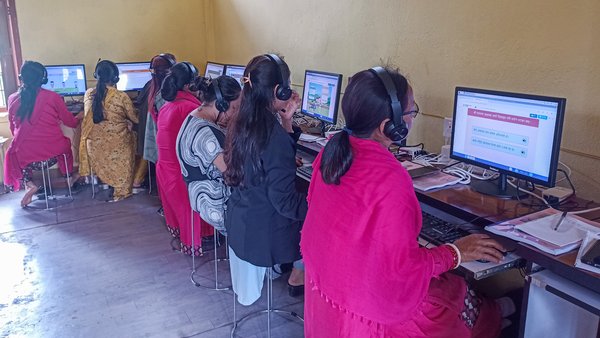
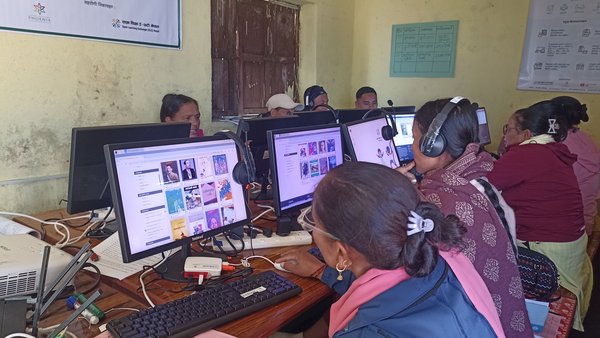
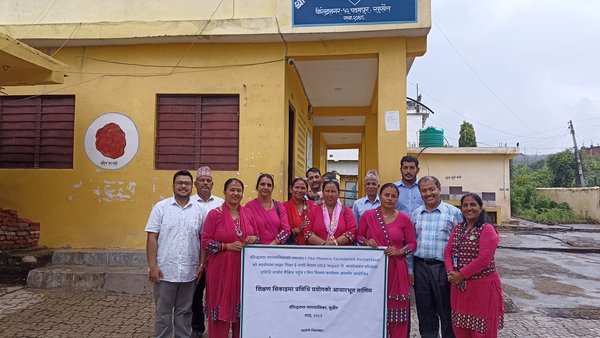
Each school's training concluded with a formal equipment handover ceremony, attended by Ward Chairpersons, education officials, and School Management Committee representatives. At Janajagrit, Senior Manager Tika Raj Karki handed the equipment to the head teacher in the presence of Ward Chairperson Chudamani Chapai. These ceremonies were a deliberate act of transfer, making clear that the technology now belonged to the school and its community, not to the programme team.
The report from Surkhet does not shy away from difficulty. Large class sizes, some exceeding 80 students, made it impossible for every child to have meaningful hands-on computer time. Some teachers, particularly at the basic school level, were encountering computers seriously for the first time and needed more support and more time than four days could fully provide. The physical infrastructure, backup power, and dedicated lab space were adequate but not ideal for long-term use.
And then there is the deeper systemic challenge: ICT-based learning is not reflected in Nepal's formal student assessment system. Teachers can integrate digital content beautifully into their lessons, but if those skills and activities count for nothing on a report card or exam, the incentive structure works against them.
These are not failures of the programme. They are honest observations about what it takes to make change stick.
Surkhet was the beginning. The lessons learned in those thirteen September days about teacher readiness, infrastructure requirements, and community engagement directly shaped how the team approached Dailekh three months later.
The schools in Surkhet are now active digital learning environments. When the OLE Nepal team returned for a monitoring visit in December, they found digital classroom norms displayed on the walls, computers protected under cloth covers, and teachers using the technology independently. The follow-up questions were practical and specific, not "how do I turn this on?" but "how do I connect my laptop to the Smart TV?"
That shift, from uncertainty to competence, is exactly what the EAST project is designed to create.
The EAST project is implemented by Open Learning Exchange Nepal (OLE Nepal). Field activities in Surkhet were conducted from August 28 to September 9, 2025.