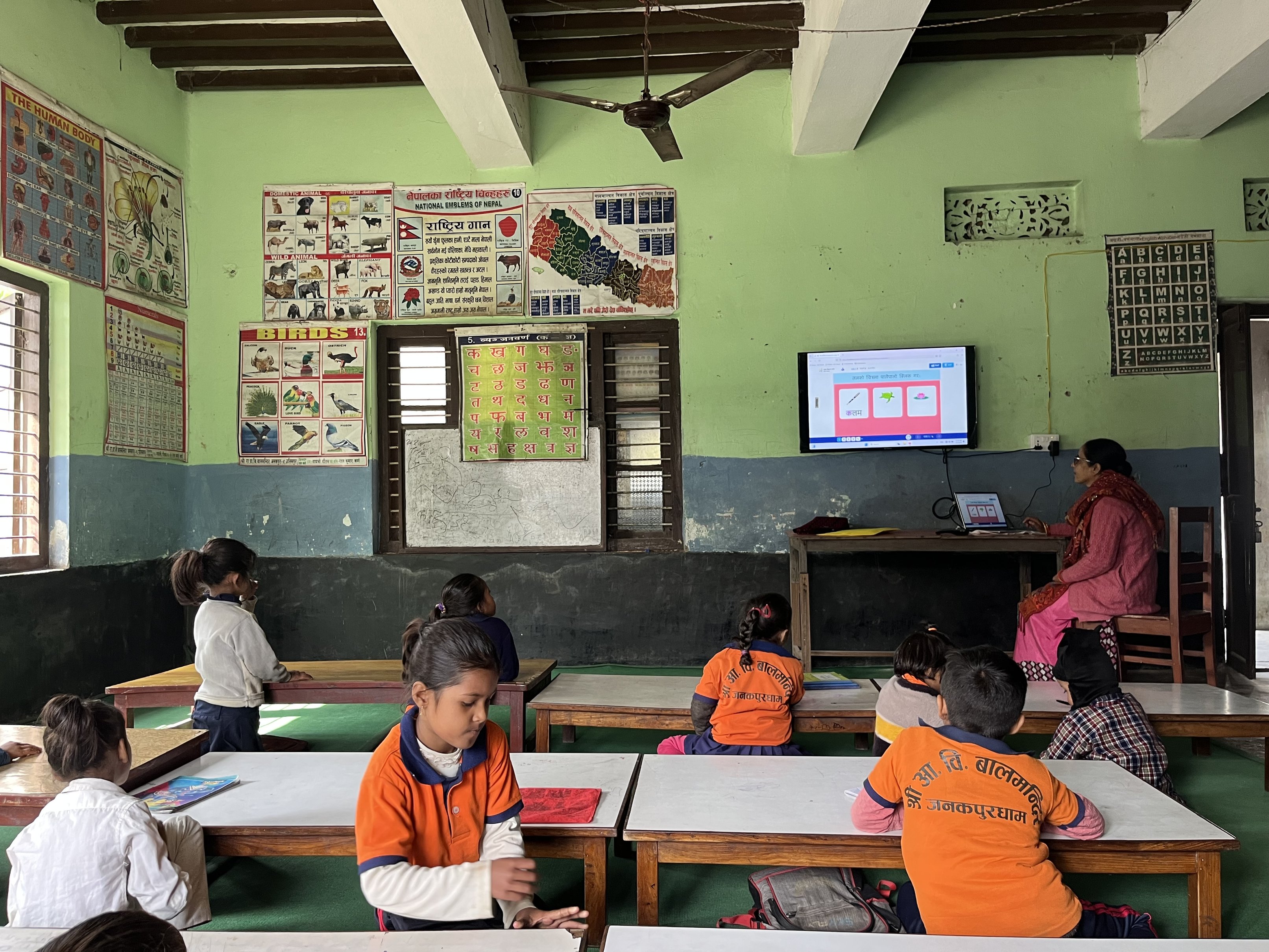
When we visited Shree Basic School Bal Mandir, Janakpur, one moment quietly captured the transformative power of digital education.
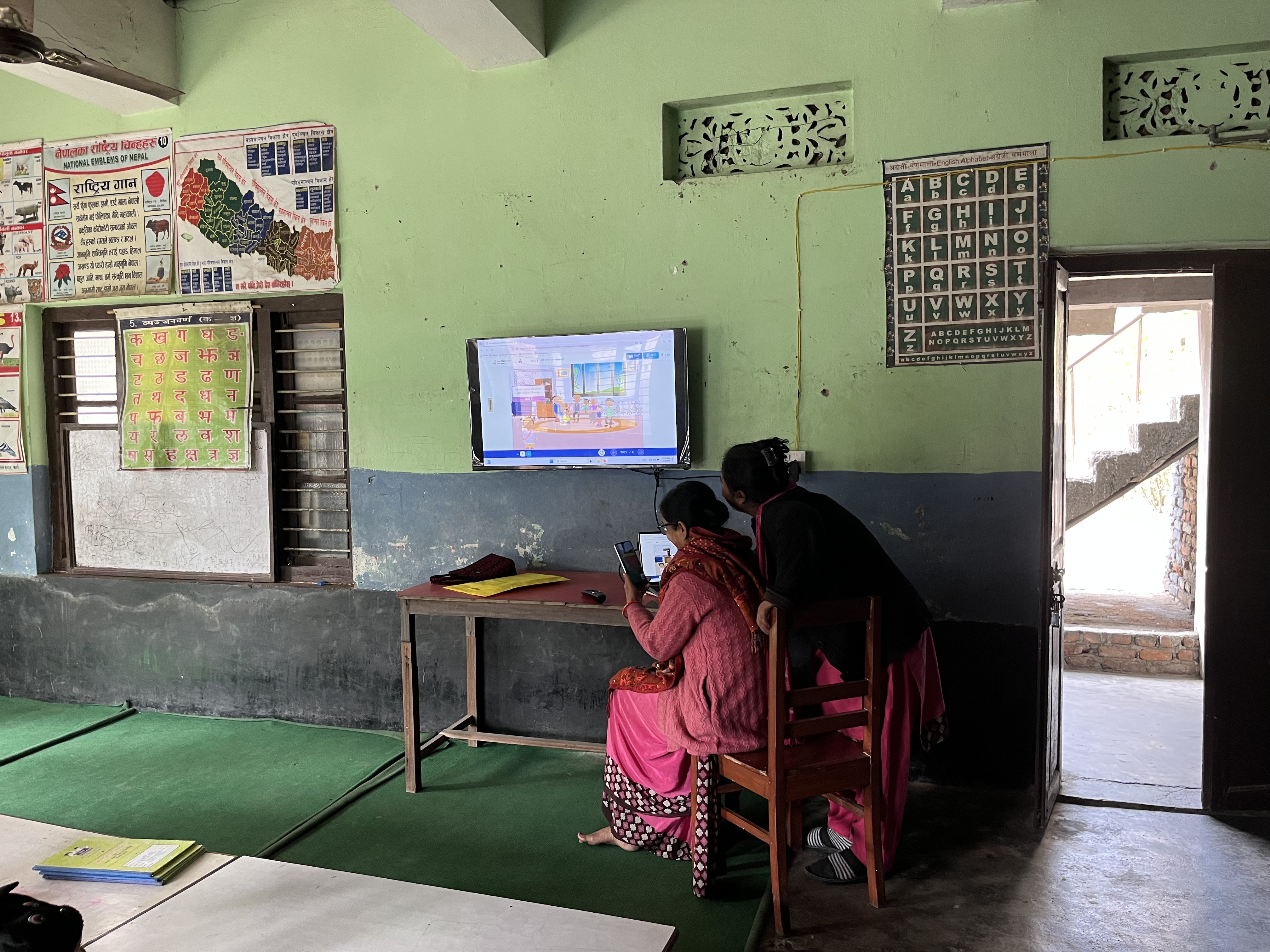
Ms. Punita Jha, an Early Childhood Development (ECD) teacher at Shree Basic School Bal Mandir, Janakpur, stood smiling as she proudly video-called her sister, who lives in a nearby city in India. For many people, making a video call may seem ordinary. For Ms. Jha, however, it represented something much more: a symbol of newfound confidence and a world of possibilities she had only recently discovered.
With a smile mixed with excitement and a little hesitation, she shared in Maithili:
“आब हम कम्प्युटर स पढ्अव सकैत छी,” which means “Now I can also teach using a computer.”
Until recently, Ms. Jha had only used a simple "tick-tick" feature phone. She had never touched a computer before. Digital technology felt unfamiliar and intimidating. Like many teachers in rural schools, she had never received formal training on using digital devices or integrating technology into classroom teaching.
That changed through the Expanding Educational Access through Technology (EAST) project.
Ms. Jha participated in a four-day, school-based teacher training, the first professional training of its kind in her teaching career. Conducted within her own school, the training combined practical, hands-on activities with classroom-oriented discussions, allowing teachers to immediately practice what they learned in a familiar environment.
The training began with the basics: becoming comfortable using computers and digital devices. Gradually, teachers explored how digital resources could support everyday teaching and learning. By the end of the training, many teachers who had never used a computer before were confidently navigating educational software, accessing digital books, and planning lessons that incorporated technology.
Alongside the training, the school received a comprehensive set of digital learning resources. A computer lab was established with educational software aligned to Nepal's curriculum (E-Paath), while an offline digital library (E-Pustakalaya) provided access to thousands of books, educational videos, audio materials, and interactive learning resources without requiring an internet connection.
Recognizing that different age groups learn differently, the program introduced multiple digital devices tailored to classroom needs. Tablets are intended primarily for students in Grades 1–3, providing opportunities for interactive learning activities. Smart TVs have been installed in Early Childhood Development classrooms, accompanied by dedicated laptops that allow teachers to access digital resources stored on the school's local digital server and display them on the larger screen. Together, these technologies create engaging learning experiences for young children while giving teachers flexible ways to present lessons.
This is the first time OLE Nepal has introduced such a comprehensive, multi-device digital learning ecosystem within the same schools. Rather than relying on a single technology, the combination of computer labs, tablets, smart TVs, laptops, and offline digital libraries increases students' opportunities to interact with digital learning resources throughout their school day. The approach is designed to ensure that technology complements age-appropriate teaching practices while making digital learning a regular part of classroom life.
For teachers like Ms. Jha, the impact extends far beyond learning to operate a computer. It has built confidence, expanded professional skills, and opened new ways to engage young learners.
With the generous support of The Phoenix Foundation, OLE Nepal is implementing the EAST project in 14 public schools, six in Madhesh Province and six in Karnali Province. To understand the program's impact, a comprehensive baseline survey has already been conducted across all participating schools. The findings will be compared with an endline survey at the conclusion of the project, helping measure changes in digital literacy, classroom practices, and student learning experiences.
As Ms. Jha proudly held up her phone during the video call, she was not simply showing her sister that she had learned to use technology. She was sharing something much bigger: the confidence that comes from learning new skills and the joy of bringing new opportunities to her students.
Sometimes, meaningful change begins with a single moment, when a teacher who once believed computers were beyond her reach can proudly say, "Now, I can teach using a computer."