OLE Nepal – Teaching with Technology Fellowship
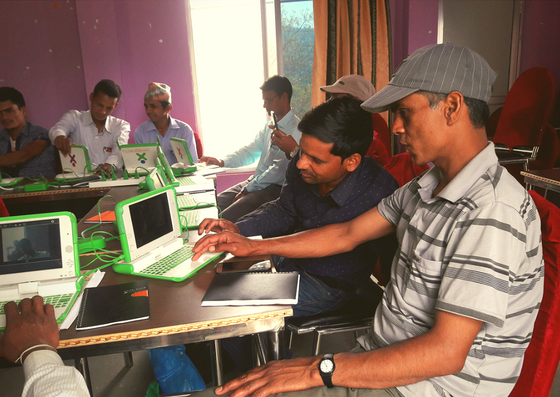
Before the first training session began in Bajhang, our senior trainer (Tika Raj Karki) asked the teachers to do something unusual.
"Bow your head to the laptop (OLPC XOXO), “ढोग्नु” he said.
And they did. Without hesitation.
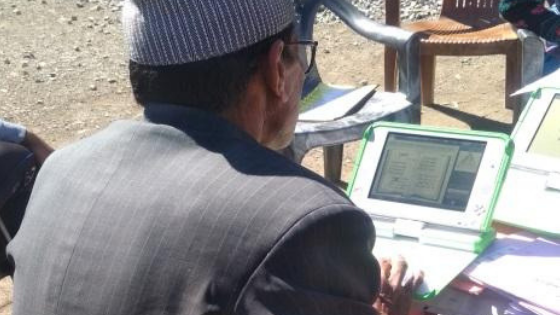
He had meant it as a light joke: a way to break the ice in a room full of people who had never touched a personal computer. But as he watched a circle of teachers lower their heads toward a small green OLPC device, he understood something about the moment he was standing in.
These were not people resisting technology. These were people who had simply never been given a reason to encounter it. The reverence was real. So was the distance.
That was where OLE Nepal's fellowship began.
There was no grand blueprint when it started in Bajhang. Just a district tucked in the far-western hills of Nepal, a handful of schools, and a question that OLE Nepal had been sitting with for a while: what does it actually look like when technology becomes part of how a child learns, not an add-on, not a lab experiment, but something woven into an ordinary school day?
That question became a program. The program became a fellowship. And that fellowship, through every iteration of its name: School Facilitator, Teaching Resident, and eventually what it is called today, has been quietly taking root across some of the most remote classrooms in the country.
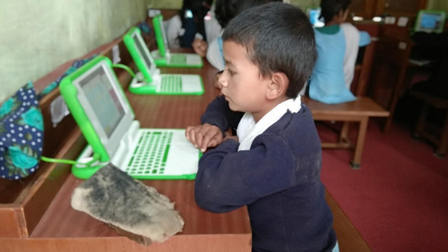
To understand what the fellows were walking into, consider what Ambadatta Joshi, a teacher at Shree Kalika Primary School in Bajhang, remembers of his own schooling. He learned to read on a dhulauto, a small board spread with dust, where his teacher guided his hand to form letters. He later progressed to kamero and khari (forms of chalk), then to ink brewed from fermenting tree leaves and a pen carved from a piece of nigalo bamboo. Paper was made at home by his father.
When OLE Nepal's program arrived at his school with 42 laptops, Joshi watched his students transform. Children who had come to school sporadically began attending regularly. The school's digital library, with over six thousand books in Nepali and English, was being borrowed by high school students from neighbouring institutions. "Nowadays," Joshi shared, "the teachers feel abnormal without digital technology in their teaching and learning."
From dhulauto to digital library, in a single generation. The distance is real. So is the proof that it can be crossed.
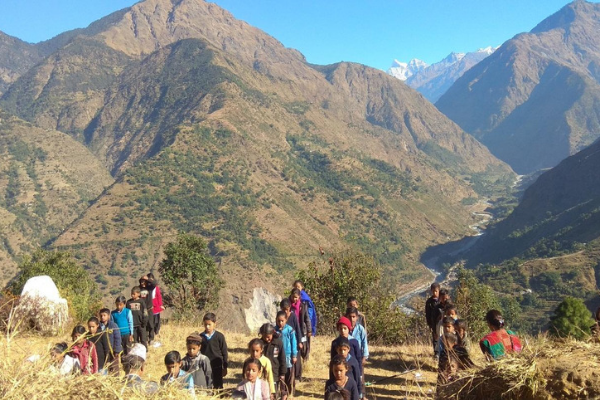
It was 2014 when the first fellows stepped into schools in Bajhang, a district folded into the far-western hills of Nepal, hours from any city, where the idea of digital learning was not abstract but simply absent.
Two fellows were placed together: one with technical fluency, the other with a sharper eye for pedagogy. Between them: five schools. The fellowship ran for three to four months, then a new cohort came, and another after that.
Bajhang saw three full phases unfold. Ten schools in the first. Thirteen in the second. Twenty by the third. Each phase introduced new fellows, additional classrooms, and teachers who arrived with varying attitudes, some curious, others skeptical, or a mix of both. Furthermore, each phase built upon the lessons learned from the previous one, analyzing which strategies were effective in class, what did not work, and how a teacher who had never previously typed a sentence began using a digital learning platform. This transition occurred not because they were instructed to do so, but because their students showed a genuine interest and engagement.
From Bajhang, the program expanded steadily, as good ideas often do, moving on to Baitadi, then Doti, Darchula, and finally Jajarkot.
In Darchula, a Teaching Resident, Subash Parajuli, in 2018, arrived in a district where students addressed teachers as "Master sa'b," and the local dialect reflected decades of cross-border exchange with India. He encountered teachers who were qualified and motivated but stretched thin. When the laptop program launched, students washed their hands before entering the laptop room, eagerly waited for instruction, and approached the screens with the same careful attention they gave to their books. "Setting cultures in the classroom is a huge challenge," Parajuli observed. "The teachers were doing a great job."
By 2019, two fellows were responsible for 15 schools across two districts, Darchula and Jajarkot. The geography was so vast and rugged that covering it resembled a military operation. Each month, they would divide and travel separately, visiting schools in rotation, returning to start the cycle again.
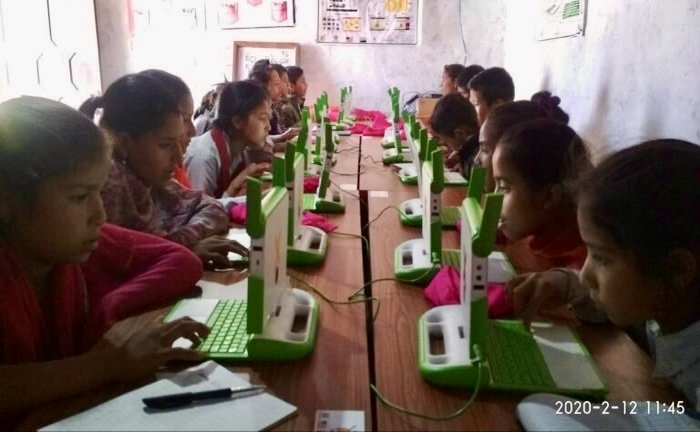
In these villages, 60 to 70 children from Grade 1 to Grade 5 shared around 20 OLPC laptops, all housed in a room known as the OLE Lab. Fellows helped teachers prepare lesson plans that ran from 10 AM to 4 PM. Through OLE Nepal's digital learning platform E-Paath, students learned Science, Math, Nepali, and English, and played digital games games that made the screens feel less like tests and more like opportunities.
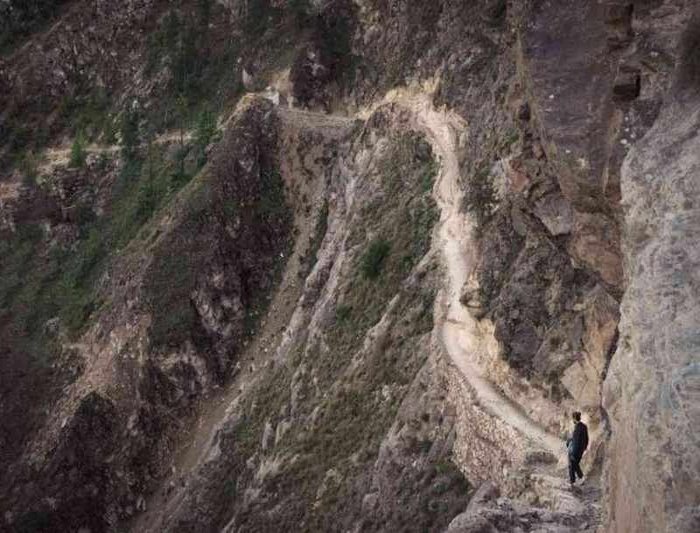
Reaching those schools required something close to endurance. "The roads were not properly constructed," recalls Ashraya Manandhar, a fellow from that cohort. "Local villagers carved small footpaths into the hillside, measuring the distance with their own feet." He laughs now at the memory. "My feet were bigger than others because of my height. The path was always too narrow for me."
Four to five hours of walking between schools, on paths built for smaller bodies, across terrain that did not accommodate schedules. And yet, when fellows arrived, students were already waiting, repeatedly asking their teachers for the E-Paath lesson, eager for their turn at a laptop. Entire school schedules were reorganized around these sessions.
After school ended, when fellows might have rested, they often found themselves sitting by the hearth with teachers, gathered around the warmth of a cooking fire while reviewing typing lessons. The school day had concluded, but learning continued. Teachers who could not stay late at school invited fellows to their homes, where they practiced together in the firelight. They learned to type, navigated different tools, and built something unquantifiable but essential: trust.
"The students surprised me the most," said Ashraya. "They would grab the laptops and learn faster than the teachers. They were not afraid of anything on that screen."
He spent six months in Darchula and Jajarkot, having come from another part of Nepal entirely. He left with a deeper understanding of a Nepal he had not known before: the languages, the ways of living, and the particular curiosity of children who had little access but reached out regardless. "That exposure has stayed with me forever," he said. "The students gave me motivation and strength."
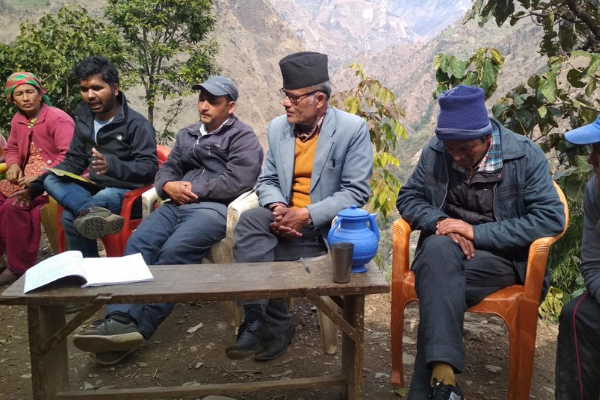
Meanwhile, in Baitadi, a former primary teacher turned OLE teaching fellow, Shikha Dhakal, noticed something that no device could create on its own. "The technology has gradually made parents feel a sense of ownership over the school's property," she observed. Parents who had struggled to provide basic necessities began expressing pride that their children were learning with tools they themselves had never encountered.
By the time the first chapter of the fellowship concluded, 107 schools had been impacted by the work. Twenty-eight fellows entered these schools as outsiders and left feeling more like colleagues.
But only one of those twenty-eight was from the communities they served.
Sit with that number for a moment.
The fellows were capable, committed, and quick to learn. Yet, there remains a significant difference between knowing a location on a map and understanding the rhythms of a school morning in that area. There is a distinction between comprehending a language and grasping the specific way a parent in that village discusses the importance of education. This gap highlights the difference between having good intentions and experiencing genuine belonging.
The program had been quietly relying on borrowed familiarity, and when COVID-19 arrived and halted everything, there was finally an opportunity to recognize this reality clearly.
The pandemic did not discriminate between urban schools with backup plans and remote classrooms sharing a single device. Everything stopped.
But the pause lasted long enough for deeper questions to surface. What had been accomplished? What had been missed? If fellows were consistently arriving from outside, well-meaning and well-trained but still external, what were the long-term costs of that approach? Who carries the knowledge when the fellow leaves?
When the fellowship resumed, it returned with those questions answered in a fundamentally different way.
 |
This phase covers twelve schools across two new regions: the Tarai plains of Madhesh and the hills of Karnali. Each fellow supports three schools within their own municipality. The fellowship now runs for a full year instead of three or four months.
And the fellows are local. People who grew up in or near the communities where they now work.
Nepal's education conversation often tends to focus on hardware: how many devices, how much bandwidth, which platform. But the infrastructure gap is stark. According to the Ministry of Education, Science, and Technology, only 36% of community schools in rural Nepal have functional computer labs, and even fewer have reliable internet access. A laptop given without a trusted human connection does not become a learning tool. It becomes, at best, a projector. At worst, a machine gathering dust in a locked room.
The examination results tell the same story. The 2026 SEE results show a national pass rate of 65.98%, an improvement on recent years. But that national figure obscures a far sharper reality in the places OLE Nepal works. Madhesh Province, where fellows are currently deployed, recorded a pass rate of just 58.5%. Karnali recorded 59%. Sudurpashchim, where the fellowship first began in Bajhang over a decade ago, came in at 51%, the weakest in the country. The School Education Sector Plan 2022 to 2032 holds the right ambitions. But ambition does not teach a child in Karnali or Madhesh when the structural conditions pulling against learning remain this entrenched.
What is consistently missing is not hardware. It is sustained human presence, community trust, and the kind of understanding that can only come from belonging to a place rather than being deployed there temporarily.
OLE Nepal appears to have internalized this. Community ownership is not a communications strategy. It is a design requirement.
The trainer who once instructed teachers to bow to a laptop understood the dynamics of that room not because he had studied them, but because he had spent years earning the right to be there. The fellow who walked narrow hillside paths came to understand Darchula and Jajarkot through perseverance and time. But he had to build that understanding from scratch.
Local fellows already carry it.
Who knows which parents' voices carry weight in a school meeting? Who understands what a child brings home at the end of the day, what pressures follow them through the door, what language they dream in? Who can tell when a classroom problem has nothing to do with technology at all?
That knowledge cannot be parachuted in. It has to already exist inside the community.
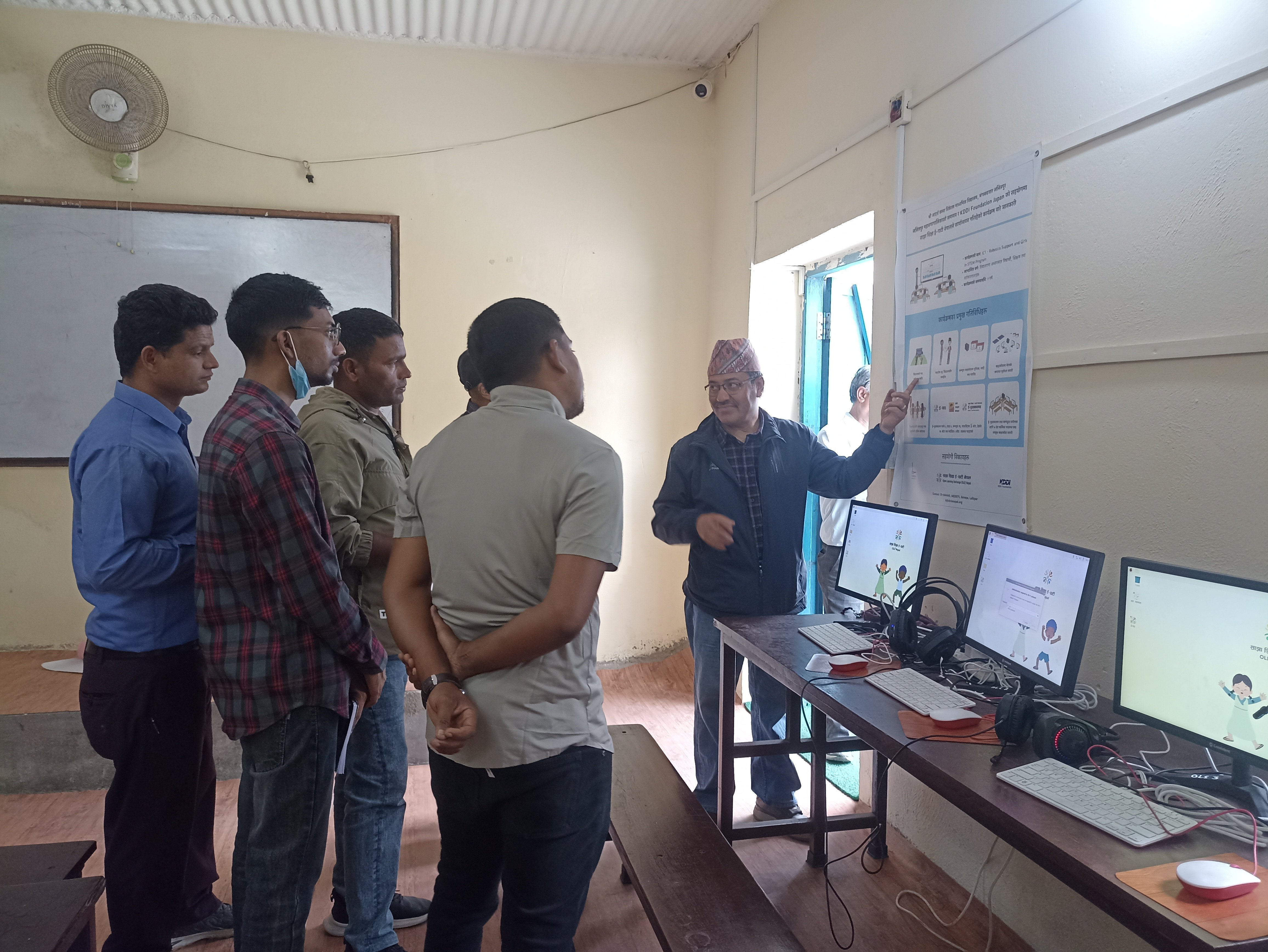
Before stepping into schools, the fellows in this phase completed a hands-on pre-service training covering both pedagogy and technology, how to support a teacher who is new to digital tools, how to sequence learning with E-Paath content, and how to troubleshoot when things go wrong. (You can find more about that training here.)
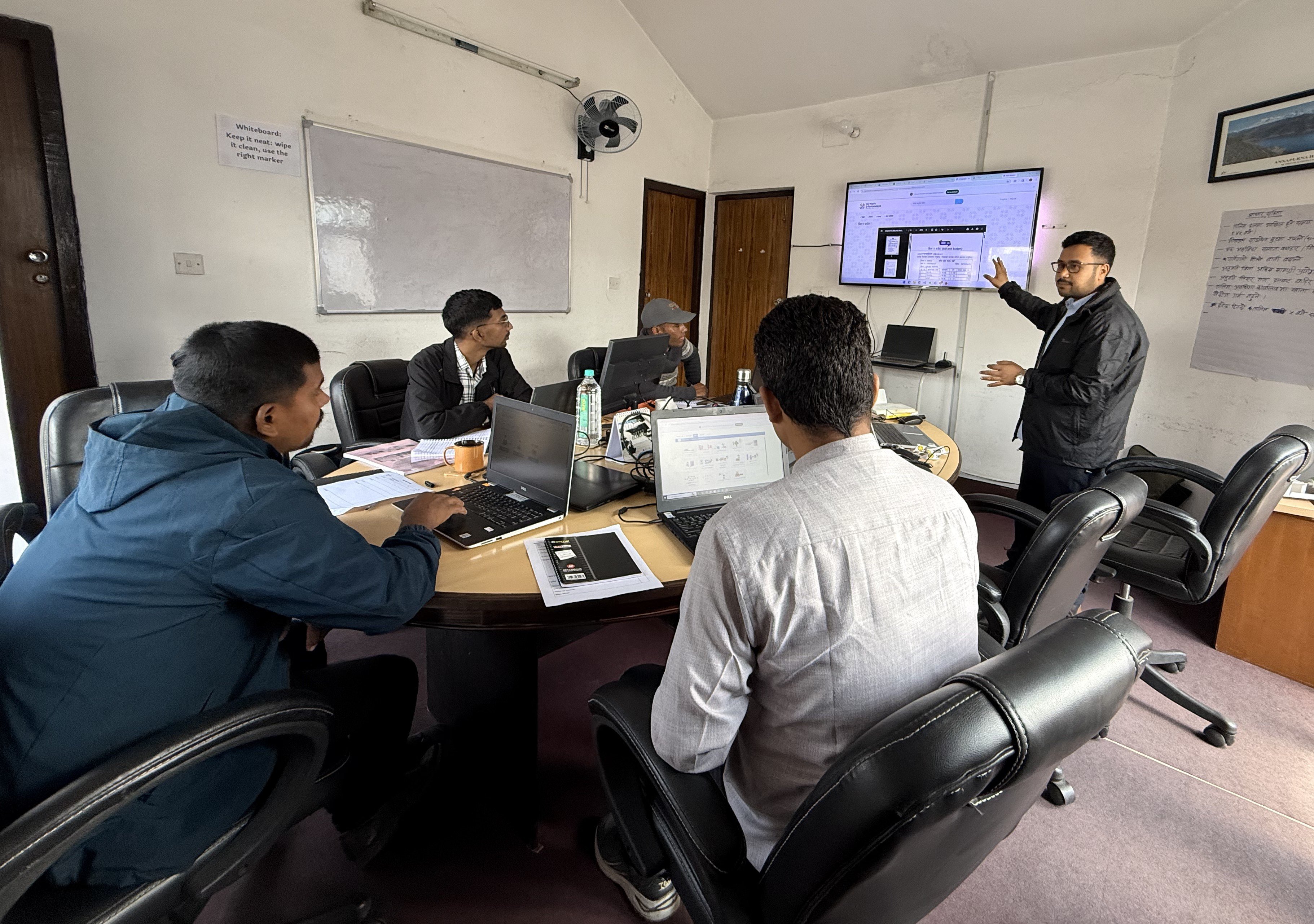 |
Now, across Madhesh and Karnali, they are at work. Supporting teachers throughout the week. Sitting with students who are learning that a screen can spark their curiosity. Meeting with parents and local government to build the kind of shared ownership that outlasts any single school year.
This aspect has always been the most challenging.
Our goal was never to create classrooms that function only when a fellow is present. Instead, we've aimed to transform what teachers, students, and communities perceive as ordinary, natural, and possible. Twelve years after launching the program in Bajhang, this belief continues to guide our work. While the names on the map have changed, the program has evolved through both its successes and its challenges. The fellows now come from the very communities they serve.
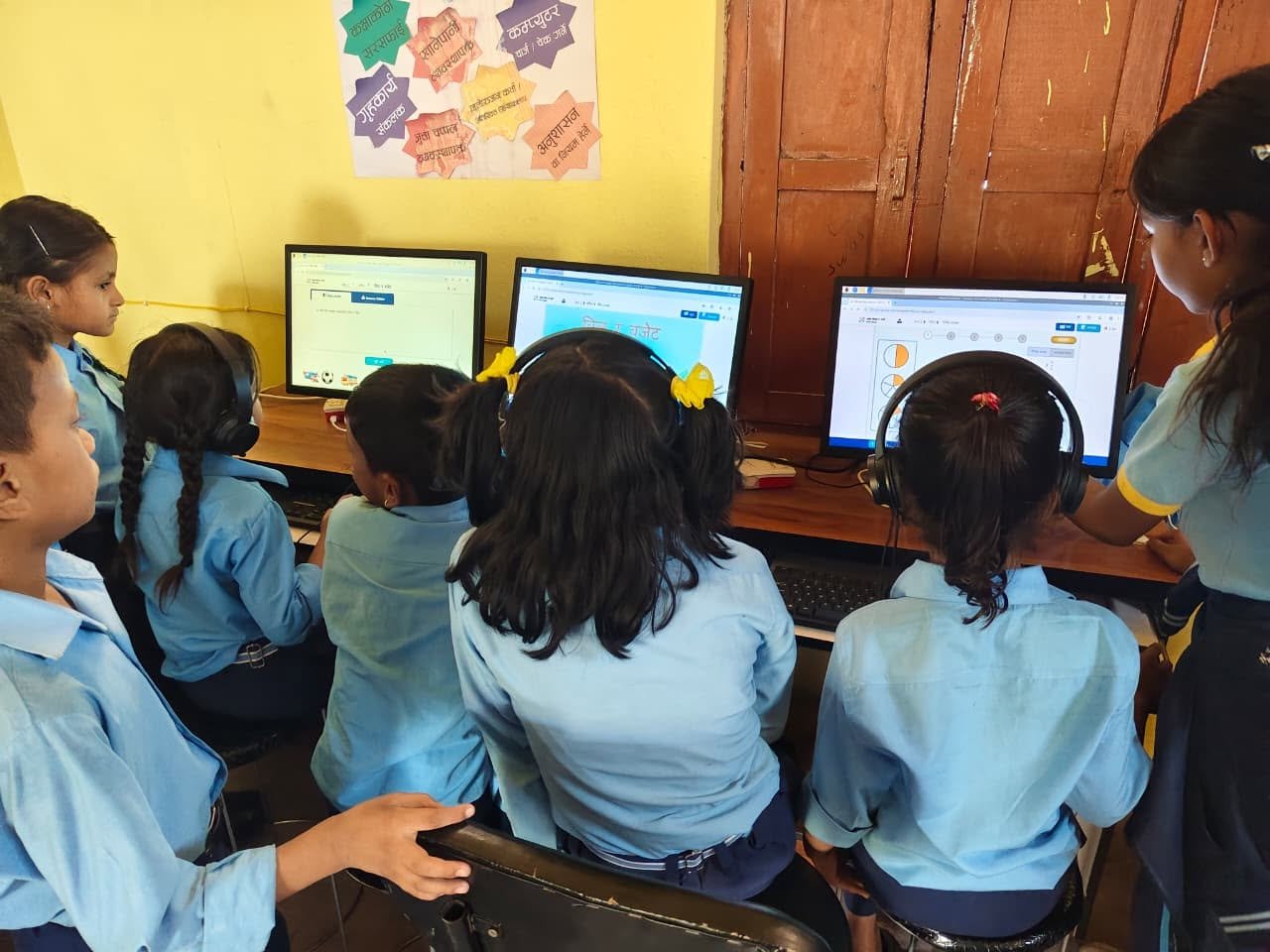 |
In a school in Madhesh or Karnali, a teacher is opening a laptop for the first time. They are not being asked to accept it reluctantly or with anxiety; rather, they are recognizing its value and are eager to engage with it.
The question that initiated all of this continues to be asked and answered, one school year at a time.