What happens when a child finally understands a lesson in a way that truly makes sense to them?
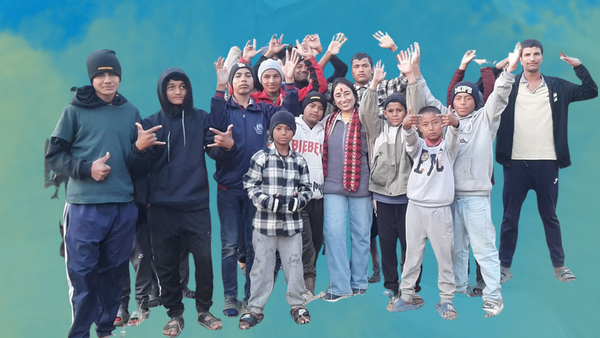
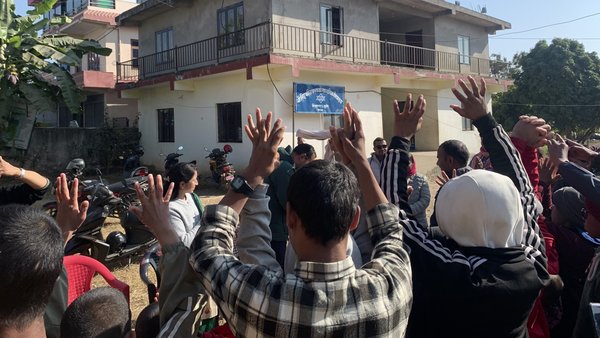
For many Deaf and Hard-of-Hearing students in Nepal, that moment has often been out of reach. While classrooms and digital platforms continue to evolve, access hasn’t always kept pace, especially for learners who rely on Nepali Sign Language (NSL). According to the Nepal Census 2078 (2021), about 2.2% of the population lives with a disability, and among them, roughly 7.85% are Deaf and 7.87% are Hard of Hearing. That represents a significant number of learners trying to navigate an education system that has not always been designed with them in mind.
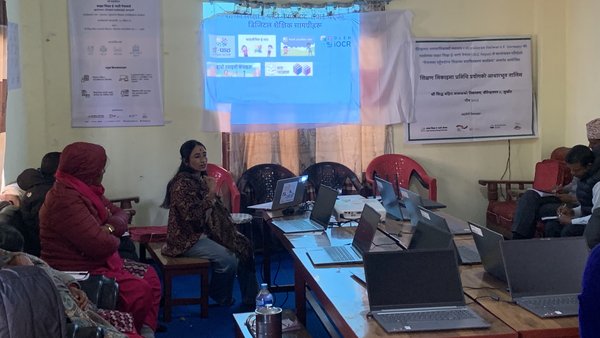
Over the past months, the Empowering Accessible Education in Nepal (EAEN) project has worked to address this gap. The project concluded in March 2026, but its relevance continues in the classrooms and resources it leaves behind.
At Siddha Bahira Balak School in Surkhet, teachers describe a noticeable shift in how students engage with lessons. Previously, much of the effort in the classroom went into bridging communication gaps. With the introduction of sign-supported digital content, that effort is now shared by the learning materials themselves.
“I have been using the laptop to teach my students, and I have seen their enthusiasm increase greatly. Using digital tools during teaching and reading improves their learning outcomes. Even our weaker students are showing signs of improvement. I hope we can get more accessible content covering all our subjects.” - Daseeram Bhakal, Teacher, Shree Siddha Bahira Balak Ko School
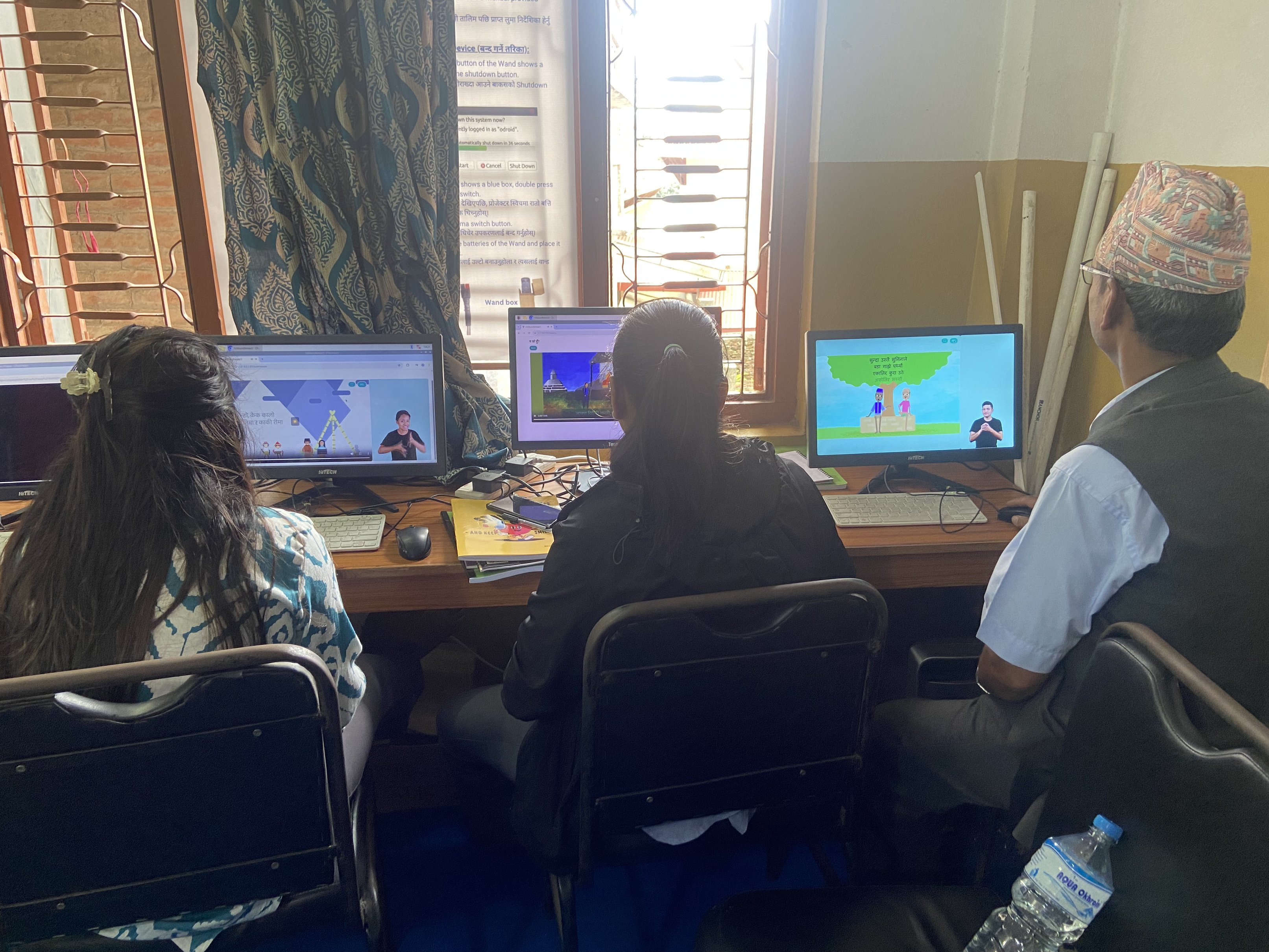
The project focused on adapting existing digital learning platforms developed by Open Learning Exchange (OLE) Nepal so they could better support hearing-impaired learners. Nepali Sign Language was integrated into E-Paath, Hamro Ramailo Katha (HRK), and Sanketik Sikai, all of which are available through E-Pustakalaya. These platforms now feature lessons and stories that include visual explanations using sign language, making them easier to understand and more relevant for students who rely on visual learning.
E-Paath (interactive curriculum-based modules) | Hamro Ramailo Kathaharu (children’s digital stories) | Sanktik Sikai | E-Pustakalaya (digital library platform)
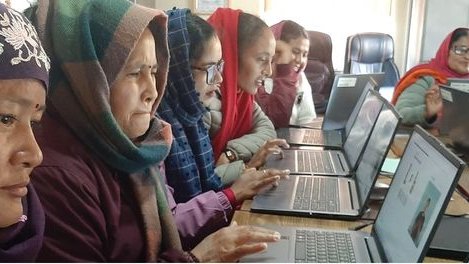
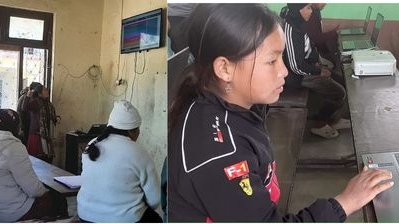
“Using technology during reading and teaching helps students focus and engage more deeply. Accessible E-Paath has been especially useful for our children.” - Prabita Sunar, School Staff, Shree Siddha Bahira Balak Ko School
“This programme has been very meaningful for our school. The teachers have worked hard, the students are enthusiastic, and I can see the positive impact of digital learning on our children’s development. I am committed to ensuring the school continues to use and benefit from these resources, and I will do everything I can to support the teachers and the programme going forward.” - Chintamani Kandel, Principal, Shree Siddha Bahira Balak Ko School
The programme was implemented by Open Learning Exchange (O.L.E.) Nepal under the Empowering Accessible Education in Nepal (EAEN) initiative, in collaboration with Himalayan Pariwar Munich e.V. (HP), GIZ Germany, Diaspora 2030, and NDFN.
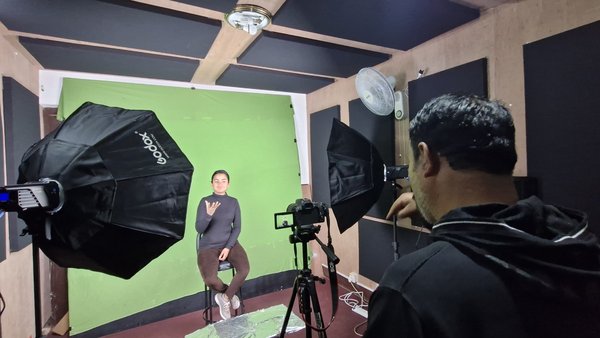
OLE Nepal led the development of content, training, and deployment. Himalayan Pariwar e.V. Munich supported with technical expertise and coordination. The National Federation of the Deaf Nepal (NDFN) played an important role in ensuring that the sign language used was accurate and meaningful, and that the approach remained grounded in the needs of the deaf community. Local Government, Teachers, and school leadership contributed throughout, shaping how the materials were used in real classroom settings.
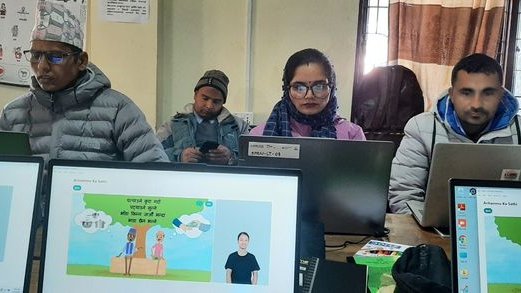
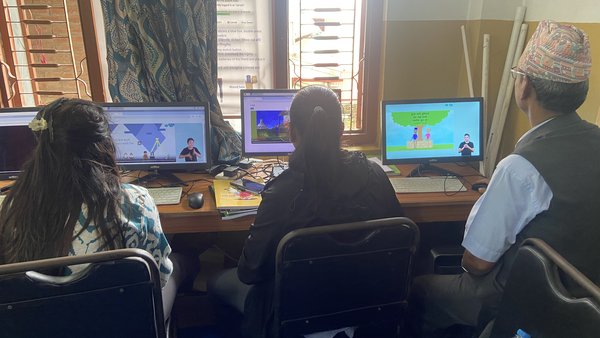
Over the course of the project, 125 Sanketik Sikai modules, 90 E-Paath lessons, and 47 Hamro Ramailo Kathaharu were produced with NSL integration. These resources are available both online and offline, which allows schools to continue using them regardless of internet access.
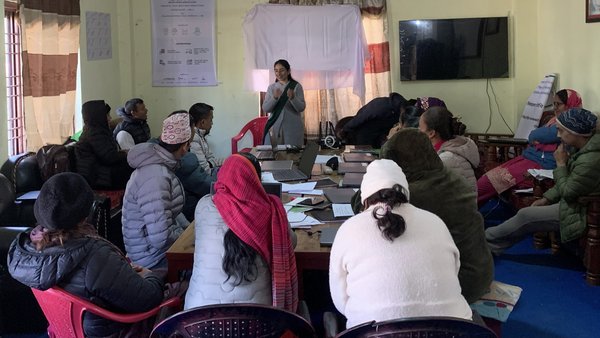
At Siddha Bahira School, the project reached 104 students and 16 teachers (9 Male, 7 Female), including two deaf teachers whose involvement was essential in shaping both content use and classroom practice. Teacher training focused on practical use: how to access, navigate, and integrate these materials into everyday teaching. Follow-up refresher training helped reinforce this, making it more likely that the resources will continue to be used beyond the project period.
“It’s not just about having the content,” one teacher reflected. “It’s about knowing how to use it in a way that helps the students.”
The EAEN project does not resolve all the challenges around inclusive education. But it shows that adapting existing tools by making them more accessible can make a difference. It also highlights the importance of working closely with the communities the work is intended for.
As the project comes to a close, the materials remain, the platforms continue to function, and the responsibility shifts toward continued use and improvement. The question going forward is not only what has been created, but how consistently and effectively it will be used in classrooms. OLE Nepal is committed to continuing to make these resources accessible, supporting teachers and schools in their effective use, and working with local stakeholders to ensure that the investments made through the project translate into sustained improvements in teaching and learning.
“It’s about making sure no child feels left out,” a teacher said during one of the sessions. That remains the simplest and most important measure of the work.